

First
World
War
POSTWAR TRANSITIONS
AND STRUGGLES

RETURNING HOME TO CHANGES
After the war, the soldiers of the Newfoundland Forestry Companies headed home to a country that would soon become overwhelmed by war debt. By the time the Great Depression set in, the Dominion of Newfoundland had reached the brink of economic collapse.
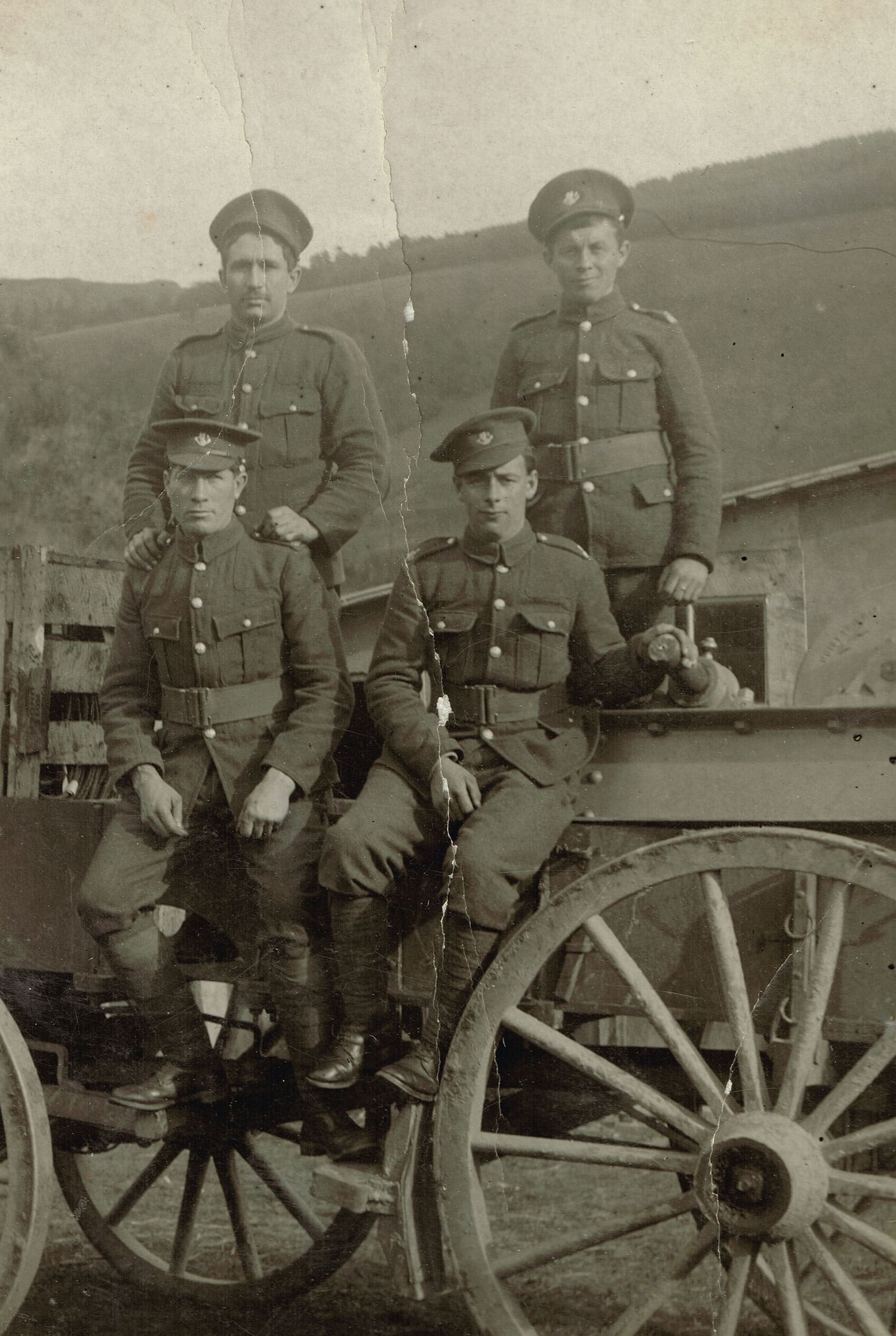
Although the foresters’ work had been highly praised and valued in the UK, they received little recognition at home—including enough government support to help with hard economic times. Returning NFC members had to fight to receive the same veterans’ allowances and benefits as the soldiers of the Newfoundland Regiment, to which the NFC belonged.
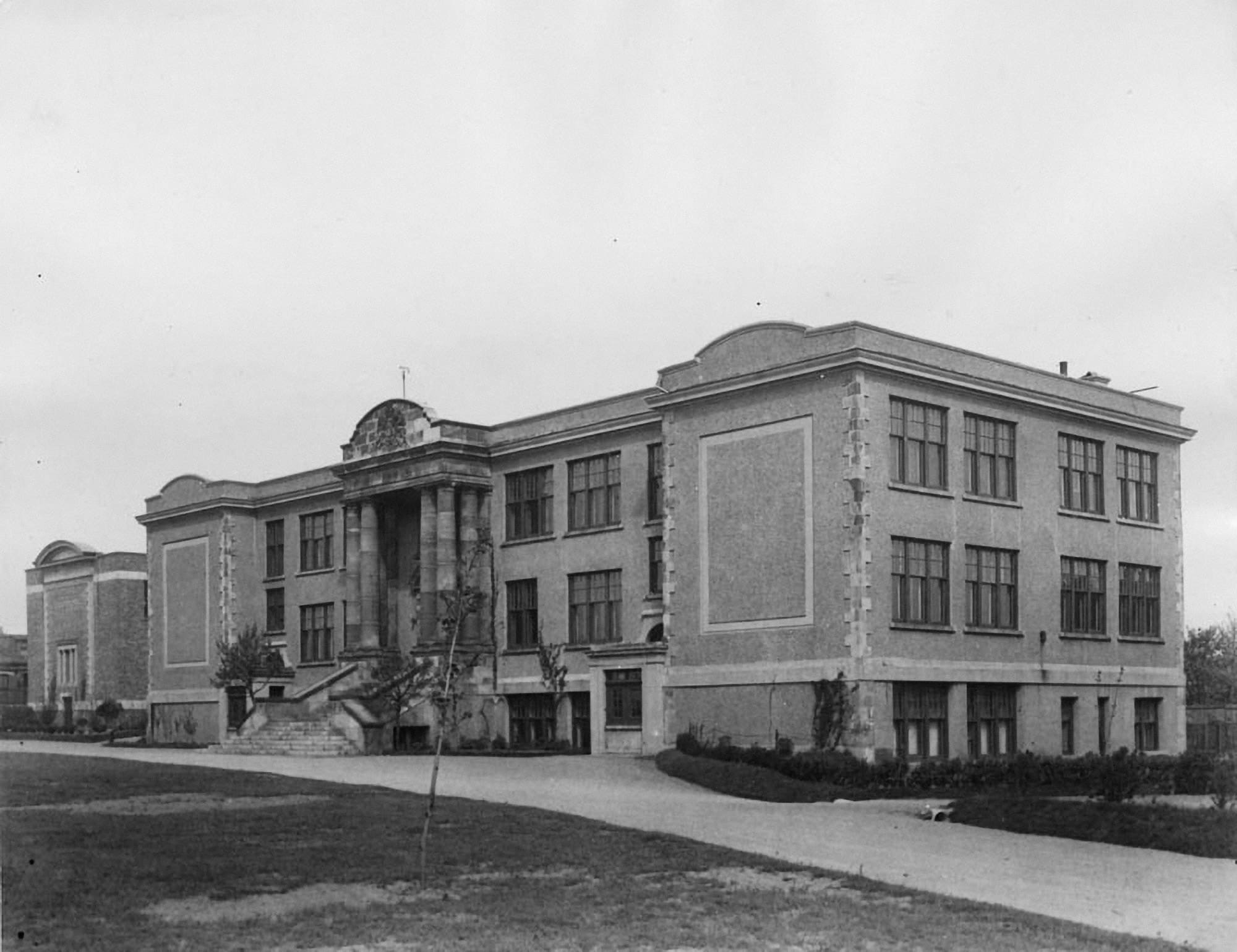
The Great War Veterans Association led the struggle for recognition for all who had served in the war. Their efforts led to the creation of the National War Memorial, unveiled in St. John’s in 1924. One of its carved figures is a forester. A living memorial, Memorial University College, was also founded after the war to honour the almost 1,500 people from the Dominion of Newfoundland who died serving in the Great War. The college opened in 1925.
The desperate timber shortage that had endangered the UK during the war came under a different kind of spotlight at war’s end. In 1919, the Forestry Commission was formed to rebuild UK forests decimated by cutting to meet wartime needs. An estimated 450,000 acres of forest had been felled. Significantly, in addition to its afforestation and reforestation efforts, the Forestry Commission also focused on sustainable forest use. The NFC foresters brought many of the Commission’s ideas back to Newfoundland, where large areas of tree cover were being cleared—especially to support an emerging pulp and paper industry—without adequate oversight.
Look & Listen
GLASGOW APPRECIATION
The foresters’ contributions to the war effort did not go unnoticed in the UK. This article published in The Evening Telegram on July 2, 1919, describes the scene as Scots gathered to bid a fond farewell to the Newfoundlanders.
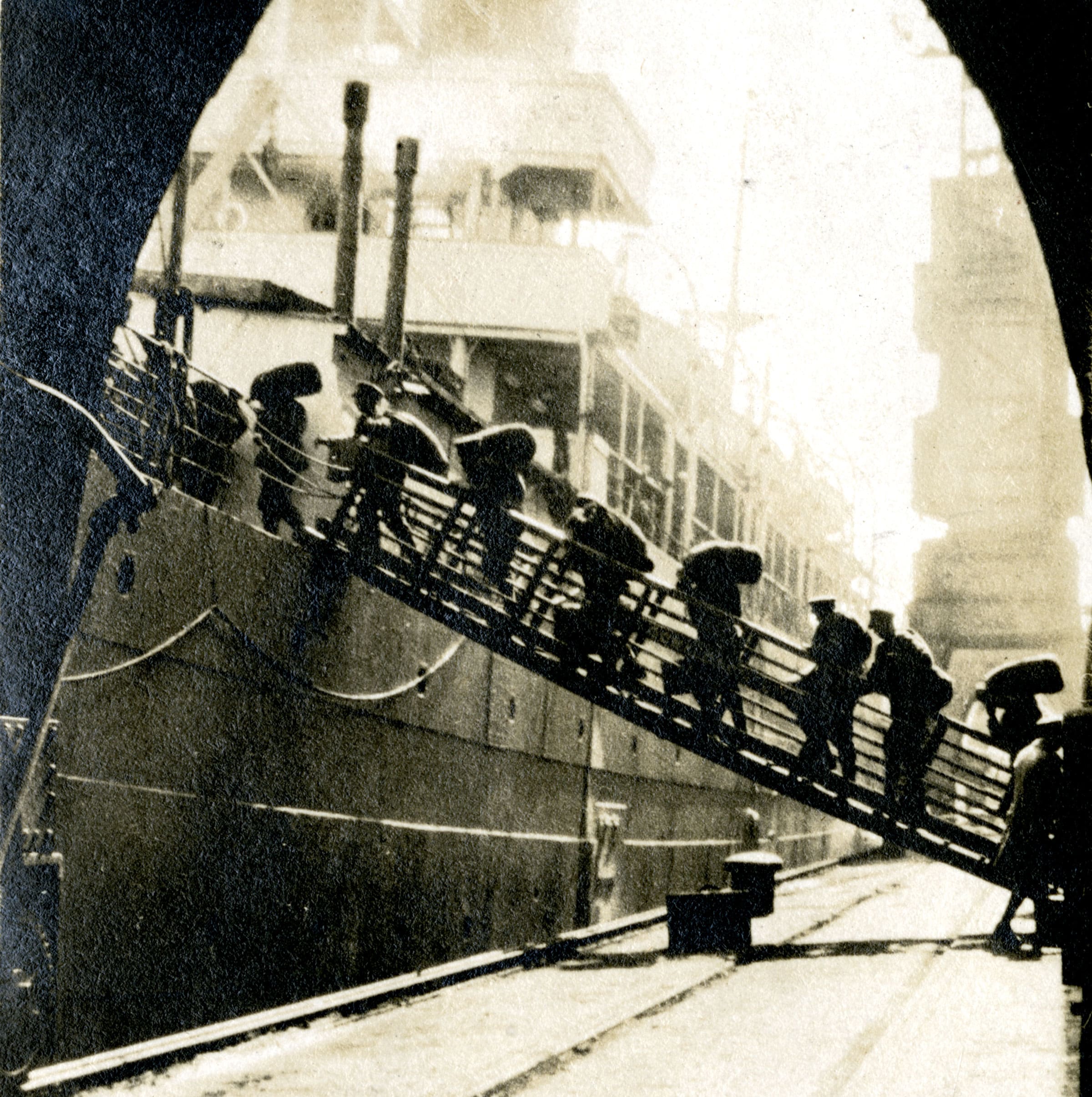
This video includes a sequence of historic photographs that illustrate the points in the narrative. The photographs are of soldiers boarding the SS Cassandra, a newspaper heading, the SS Cassandra arriving in St. John’s, a ship leaving Glasgow, and a group photo of the Royal Newfoundland Regiment.
Title: Glasgow Appreciation
Narrator:
On behalf of the citizens of Glasgow the Mayor addressed the troops and paid high encomiums to the splendid service performed by the Colonials in the Great War.
Image of a newspaper headline with the words “Glasgow’s Appreciation. Shortly before the S. S. Cassandra left Glasgow on the afternoon of June 24th, the Major and Councillors visited the ship and were received by Major Emerson and officers of the Nfld. And Canadian regiments.”
He wished them all “God-speed” and a safe return to their homes and loved ones.
Three rousing cheers were then given to the troops for the Mayor and citizens of Glasgow for their kind wishes and for their liberal donation of fifty thousand cigarettes.
[In the background an unaccompanied male quartet sings “Auld Lang Syne” in harmony]
After the singing of “Auld Lang Syne,” and while the Scottish bands played “Britannia Rules the Waves,” the SS Cassandra moved out of dock into the Clyde on her way to sea.
[Male quartet continues to sing the chorus of “Auld Lang Syne”]
For auld lang syne, my Dear, For auld lang syne, We’ll take a cup o’ kindness yet, For auld lang syne.
Credits:
Produced by Ursula A. Kelly & Meghan C. Forsyth
Narrated by Fiona Miller
Audio recorded by Keith Miller
Photos courtesy of The Rooms Provincial Archives and the Library of Congress
“Auld Lang Syne” (Robert Burns) recorded in 1918 by the Peerless Quartet, courtesy of the Library of Congress Recorded Sound Collection
2024
Logos: Grand Falls-Windsor Heritage Society, Memorial University and Digital Museums Canada
FORESTS UNDER ATTACK
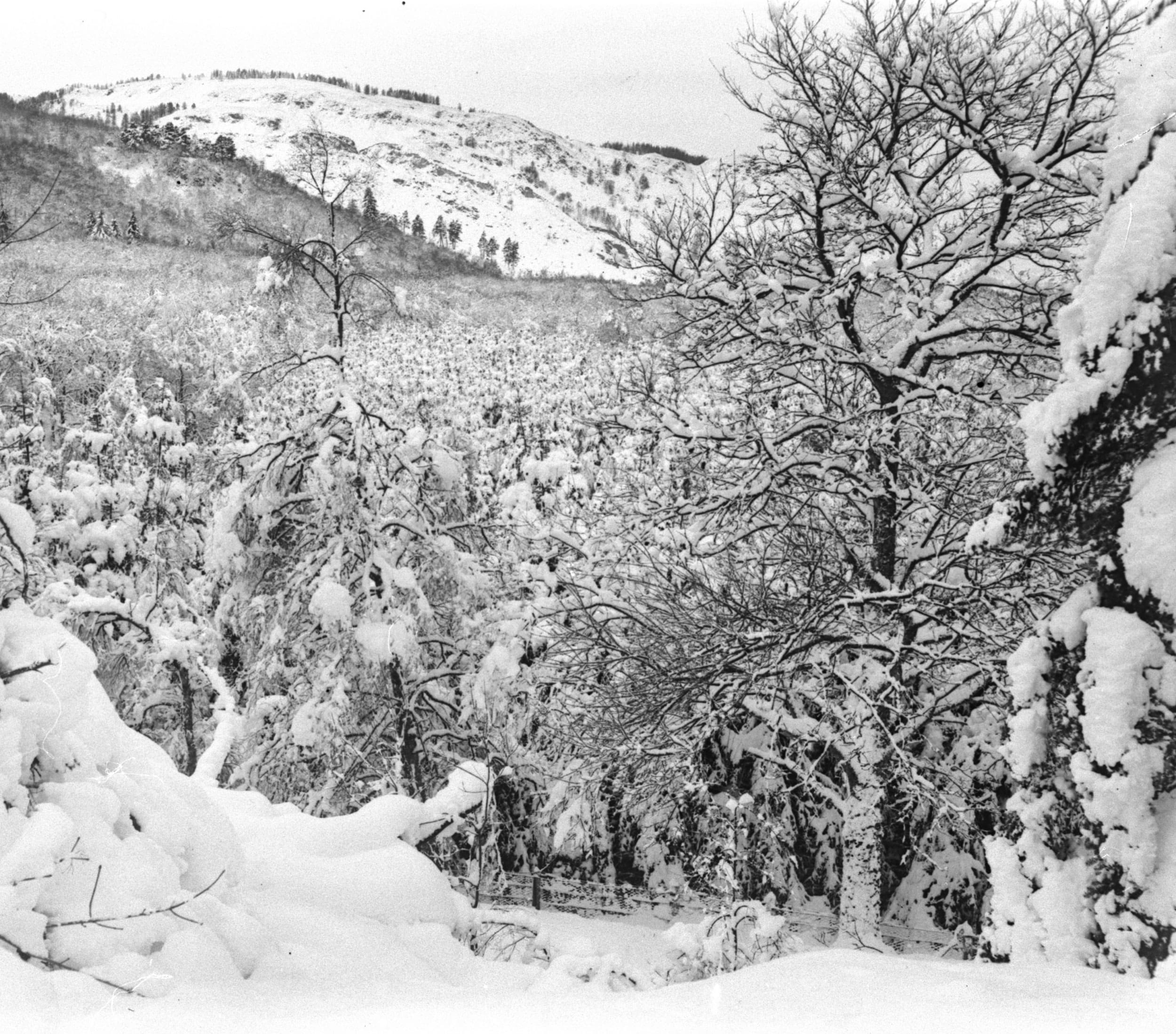
This editorial from The Western Star (July 23, 1919) discusses how the UK addressed wartime clear-cutting, suggesting that what was happening there should also be applied to forest conservation in Newfoundland. At the time, “timber barons” held leases to cut large tracts of forest and a pulp and paper industry was growing. A second mill at Corner Brook was about to expand activity beyond the mill at Grand Falls.
The insatiable needs of civilization are daily devastating the surviving great forests of the world: and in some countries the timber industry is becoming a very serious one—so serious that the eyes of capitalists are being turned to other countries than their own where the forests are in a primeval state.
In Newfoundland, the lumber industry has for a number of years proved a valuable adjunct to other industries, and hundreds of thousands of dollars are put in circulation today from an industry that was in its infancy not that many years since.
There are yet many hills and valleys, thickly wooded with heavy timber such as birch, spruce, fir, white pine, and juniper, needing every possible attention that a discerning administration can bestow upon them for their preservation.
It is very essential for the future of our forests that a Forestry Policy be adopted by our Government; and with this object in view it is necessary that a Department of Forestry be established. No one will question such an arrangement, for it is a well-known fact that our timber areas are fast becoming depleted, and little or no effort is being made to conserve them, or to have a system of afforestation carried out. . . .
Today the people of England and Scotland are more than ever alive to the fact that the forests of the world (particularly their own forests) are fast being used up, and are giving great attention to the question of lumber supply. They are looking to the future requirements of the state, and are giving every possible encouragement for the afforestation of lands that have become depleted of timber.
So keenly alive are they, that Forestry Schools have been established where both men and women are being taught scientific and practical methods of afforestation at the Forestry School at Dunkeld near where the Newfoundland Forestry Companies were operating. They are working in the nurseries, and planting trees on the estate of the Duke of Atholl, which was laid bare by the axes of our woodsmen, so that their own country may profit by the knowledge thus gained.
What is our own Government going to do? Will they make some declaration as to the policy they intend to initiate and carry out, not merely for the conservation of our present timber areas, but for the afforestation of the vast stretches of country that have been depleted of its great timber?
LISTEN

YOUR WORK HAS BEEN OF GREATEST VALUE TO THIS COUNTRY
The NFC received much praise for its work from government authorities in the UK and Newfoundland. Below is an excerpt from a letter that John Stirling Maxwell, Assistant Controller of Timber Supplies, Edinburgh, wrote to Major M. Sullivan, Commanding Officer, Newfoundland Forestry Companies. His letter was printed in full in The Evening Telegram on March 18, 1919.
Now that you are beginning to wind down at Kenmore, I want to express to you on behalf of the Scots Branch of the Timber Supply Department, our hearty thanks for the assistance we have received from yourself, your officers, and your men, and from Mr. Beeton who has been such a good friend to the enterprise. You have battled two of the most difficult options which have come within the scope of the Department’s work in Scotland . . . . The 3,000 feet chute which you constructed at Craigvinean will long be remembered as marking an epoch in forest utilization in Scotland . . . . Your work has been of the greatest value to this country at a time when timber was sorely needed for war purposes and labor impossible to obtain . . . . I shall be grateful if you can find any means of conveying our thanks to both officers and men.
LISTEN

SUPPORT FOR THE WIELDERS OF AXE AND SAW
At home, the court of public opinion did not always rule favourably on the value of the foresters’ service. It was often ignored or dismissed. Some people, such as the writer of this editorial in The Evening Telegram, did acknowledge the value of their contribution and argued that others follow suit.
The men of the fighting services, in the Royal Newfoundland Regiment and the Royal Naval Reserve, have been praised and entertained, lauded and honored, acclaimed and welcomed in every way that enthusiasm, prompted by patriotism and pride in the gallant members of the army and navy who so heroically fought and conquered, could devise . . . . But there is another khaki-clad division whose services during the great struggle were of a very high order, but for whom, while they worked, industriously and ostentatiously, there was little, if any, praise or laudation. Nevertheless their part in the war game was nonetheless important and their duties nonetheless imperative, though their form of service did not oblige them to go into the battle line. They were the wielders of the axe and saw: the lumbermen of the army and the nation, the Forestry Battalions of the Empire whose labors were incessant in providing the huge supplies of squared and sawn timber and lumber, which were so necessary to the fighting forces, and which material was used in so many different ways at home and in the field to the advantage of the Allies.
– excerpt from “The Forestry Battalion,” an editorial in The Evening Telegram, March 19, 1919
LISTEN
A SQUARE DEAL
The foresters themselves sometimes took to the press to plead their case for greater recognition, as in this letter to the editor from The Evening Telegram, February 4, 1919.
Kindly allow me space in your most valuable paper, concerning the pay and other items of the Nfld. Forestry [Companies]. I think, Mr. Editor, they should be in line with the Regiment; I don’t mean to say they should get as much, but they are simply forgotten about. When we enlisted we were treated the same as a soldier. We received the same pay and other issue as the regular [soldier] . . . . [W]hen we were discharged, we only received twenty dollars ($20.00) for clothing, and now the line soldiers are receiving sixty dollars ($60.00). It is not fair, and something must be done for the Foresters. So it’s up to the Great War Veterans Association to decide if they will help us or not.
LISTEN

Portrait of a Forester
William J. Woodford (NFC #8211) of St. John’s was 21 when he enlisted on May 28, 1917—one of three Woodford brothers to go overseas. His sibling Frank (NR #364), who had enlisted in the Newfoundland Regiment, was killed at the Battle of Beaumont Hamel on July 1, 1916. Michael Woodford enlisted in the NFC (#8030) in April 1917. William was ineligible for regular service in the Regiment (he had a glass eye), and so he, too, became a forester.
William served until the end of the war. When he was demobilized (July 9, 1919), he held the rank of Lance Corporal. He married Jessie Elizabeth Ross of Kingussie, Inverness-shire, Scotland. In Newfoundland, the couple lived in St. John’s and William worked with the Newfoundland Post Office in various positions. In 1949, he was named a Member of the British Empire (MBE) for his work with the St. John’s branch of the Great War Veterans Association of Newfoundland, which promoted the well-being of veterans.

THE BRITISH WAR MEDAL
The British War Medal, 1918, was awarded to officers and men who served in any of the forces for the UK during the First World War. All members of the NFC received this medal.
Courtesy of Archives and Special Collections, 02.03.033, Memorial University Libraries
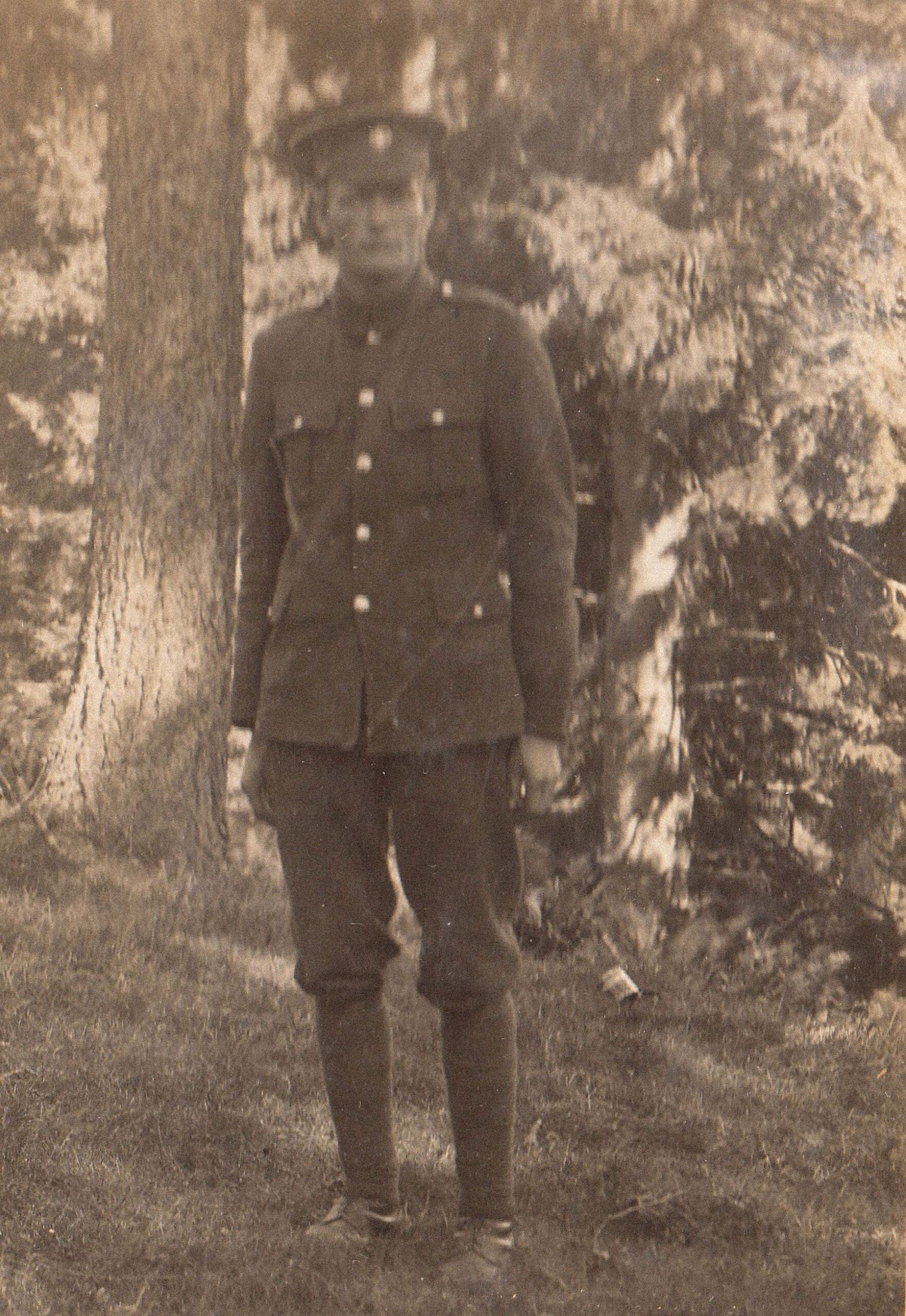
AN NFC SOLDIER
An unidentified NFC soldier stands in wooded area at Dunkeld, ca. 1918.
Courtesy of Dunkeld Community Archives