

First
World
War
MIGRATIONS, MARRIAGES
AND MEMORIES
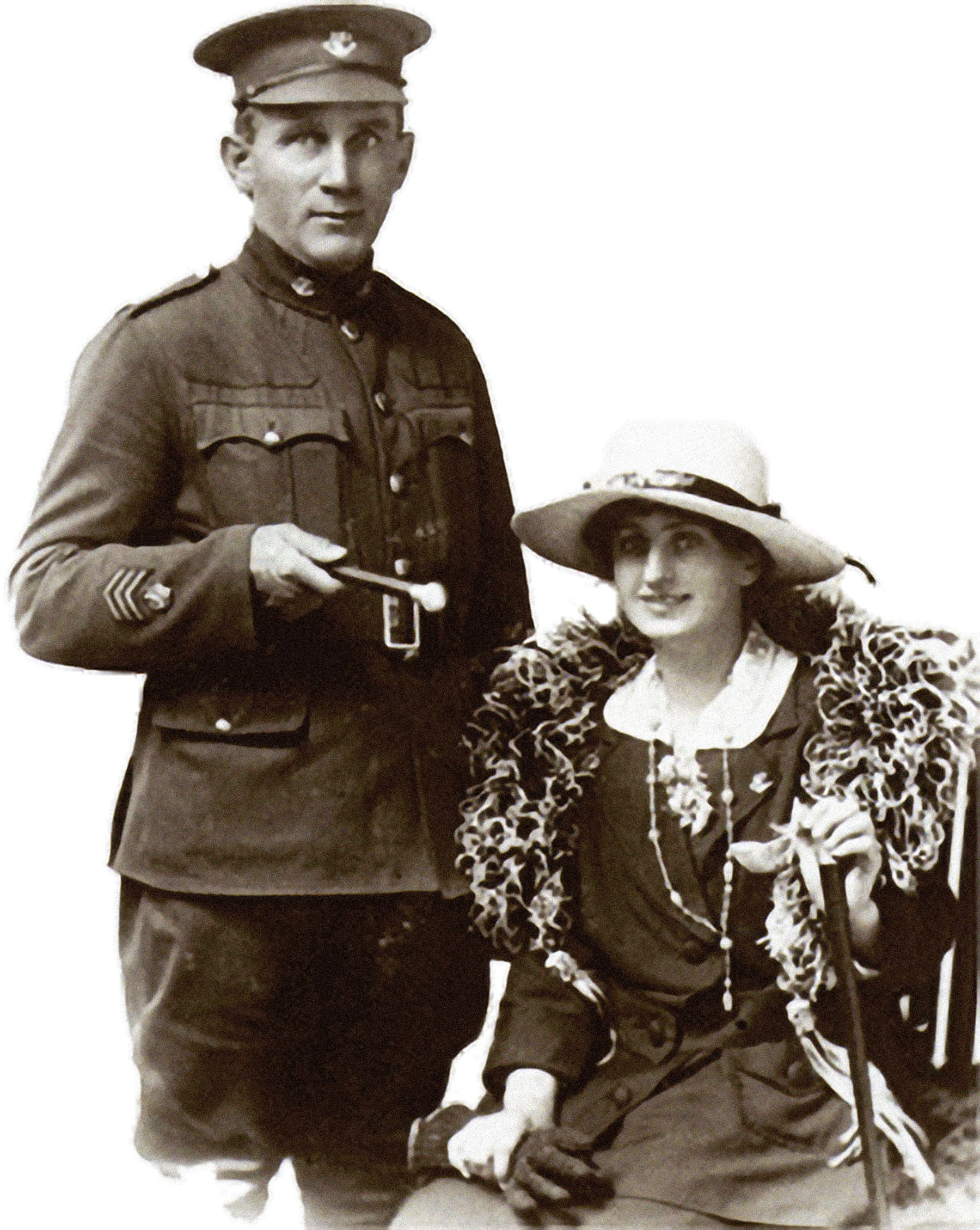
BACHELORS NO MORE
The NFC was stationed in Scotland for less than two years, but that was long enough for relationships to develop between its members and local Scottish women. Close to three dozen marriages occurred and, when the war ended, most couples left Scotland for Newfoundland.
While a few brides eventually returned to the UK, many more remained. Some couples also emigrated, choosing to live in Canada or the USA where employment was more readily available. Those who remained settled into life in Newfoundland, contributing their energies and talents to raising families and improving the well-being of the communities they now called home.
Look & Listen
A NEW POET LAUREATE
Ena Constance Culbard of Leicestershire, England, met and married John A. Barrett (NFC #8028) at Dunkeld, where she was living with her adoptive widowed grandmother, Jessy Culbard. Ena and John married at Dunkeld in 1920 and then moved to Curling, Newfoundland, her husband’s hometown.
Once settled in her new country, Ena Barrett continued with her avocation: writing. Her poems were published regularly in several local magazines, including The Newfoundland Quarterly and The Veteran. Her collections of poems include Rainbow Thoughts (published in 1916 while she was still in the UK), Rainbow Lyrics (1922), Lilts of Newfoundland (1929) and Mayflowers and Roses (1946). The two later collections contain many poems about motherhood, war, and her appreciation for “the glory of this mystic isle” of Newfoundland.
Ena Barrett’s writing about key developments in the country earned her the unofficial title of Newfoundland’s poet laureate. In an interview published in The Western Star on March 23, 1957, she said of her adopted home: “I love Newfoundland dearly. The people are so nice and the countryside is wonderful. I have always been happy here.”
In her poem “England,” Barrett writes about her love of her birthplace and first homeland, England. It is read here by her granddaughter, Helena Barrett MacLean.
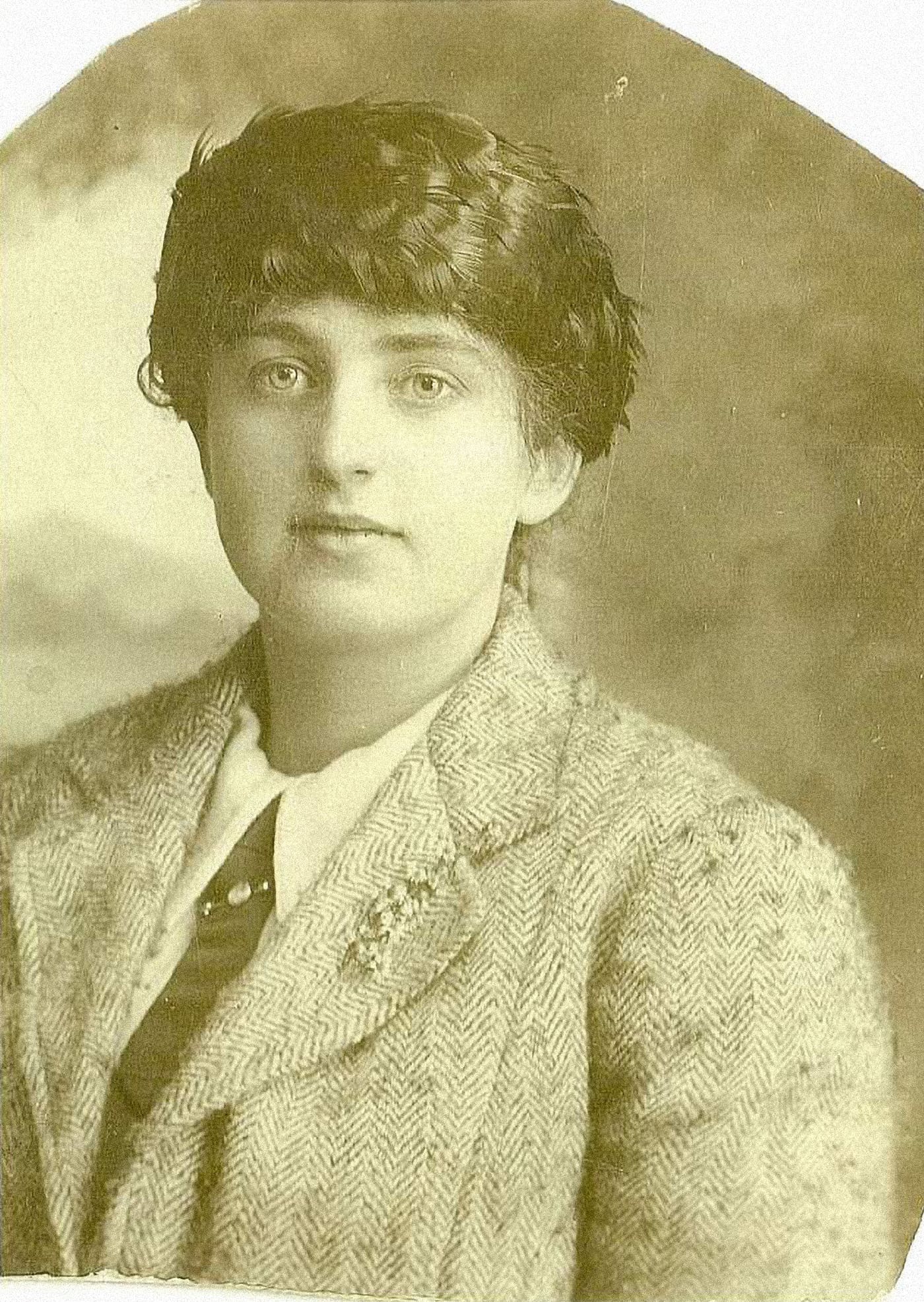
This video is a reading of the poem “England” by Ena Constance Barrett, accompanied by a series of historic photographs that illustrate imagery in the poem. These photographs include the poet ca. 1915, a vicarage with the vicar standing in the garden, the Charmandean House garden in West Sussex in the 1920s, and Oxford Road in Reading ca. 1920.
Title: England
Narrator:
No matter where I may travel
Or where my rest will be,
’Tis these will ever be England,
And England alone to me—
The peace of a vicarage garden,
Smooth lawns, a lavender bed,
And the vicar busied with weeding,
The sun on his bowed white head;
Primroses deep in the coppice,
Drenched with the silver dew;
The frail young leaves of the beech trees
With the blue sky peeping through;
Song of the birds at dawning,
The scent of the fresh ploughed earth;
And the grave, by soft moss covered,
Of the mother who gave me birth.
This is the England they fought for;
Not the glory of spire and tower,
The glory that hate can shatter
In one tempestuous hour;
But the glory by artist painted,
By bard immortalized,
The sabbath peace of a homeland
The hearts of her sons have prized.
This is the England they died for
And will die again and again;
Not for her power as a nation,
But for dear green hills in the rain.
And no matter where I may travel
Or where my rest will be,
These things will ever mean England
And England alone to me.
Credits:
Produced by Ursula A. Kelly & Meghan C. Forsyth
“England” by Ena Constance (Culbard) Barrett
Read by Helena Barrett MacLean
Photo of Ena Culbard, ca. 1915, courtesy of Helena Barrett MacLean
Photo “Bradfield Church Graveyard” by Dave Hudson
Historical photos courtesy of Wikimedia Commons
2024
Logos: Grand Falls-Windsor Heritage Society, Memorial University and Digital Museums Canada

THEIRS IS NO EASY LOT; MAKE IT NO HARDER
Many members of the press penned warm, often lavish, welcomes to the women from the UK who immigrated with their husbands to Newfoundland at the end of the First World War. This welcome is an abridged version of “Scotch Lassies” by E.A. Smith.
When our brave boys, filled with the spirit of the Great Adventure, abode awhile in the Old Land, they made them welcome and their people helped them overcome the homesickness that ever tears the hearts of those who have, perhaps for aye, left home and kindred miles away across a weary waste of waters. Lassies, you were their solace then, be they your comfort now . . . .
It will be both a duty and a pleasure to welcome to our hearths and take to our hearts those to whom our sailor boys and soldier lads are bound by the ties of love and devotion. Let us make them feel at home. Let each of them realize that she is one of ourselves . . . now, our own kith and kin . . . .
Bear with them, then, in their troubles, help them in their difficulties. Theirs is no easy lot—make it no harder. Love them like your own daughters and they will, in turn, love you too. Give them a true Newfoundland welcome, and they will neither ask nor wish for more.
– E.A. Smith in The Newfoundland Magazine, July 1919
LISTEN
A VISIT TO THE UNITED KINGDOM
Margaret Isabella (Belle) Barron of Crossett’s Seat, Aberfeldy, married Enos Budgell (NFC #8152) of New Bay, Newfoundland. They settled in Corner Brook in his homeland. In 1948, Belle returned to Scotland for a visit. Here is an abridged account of her trip, as published in full in The Western Star on May 27, 1949.
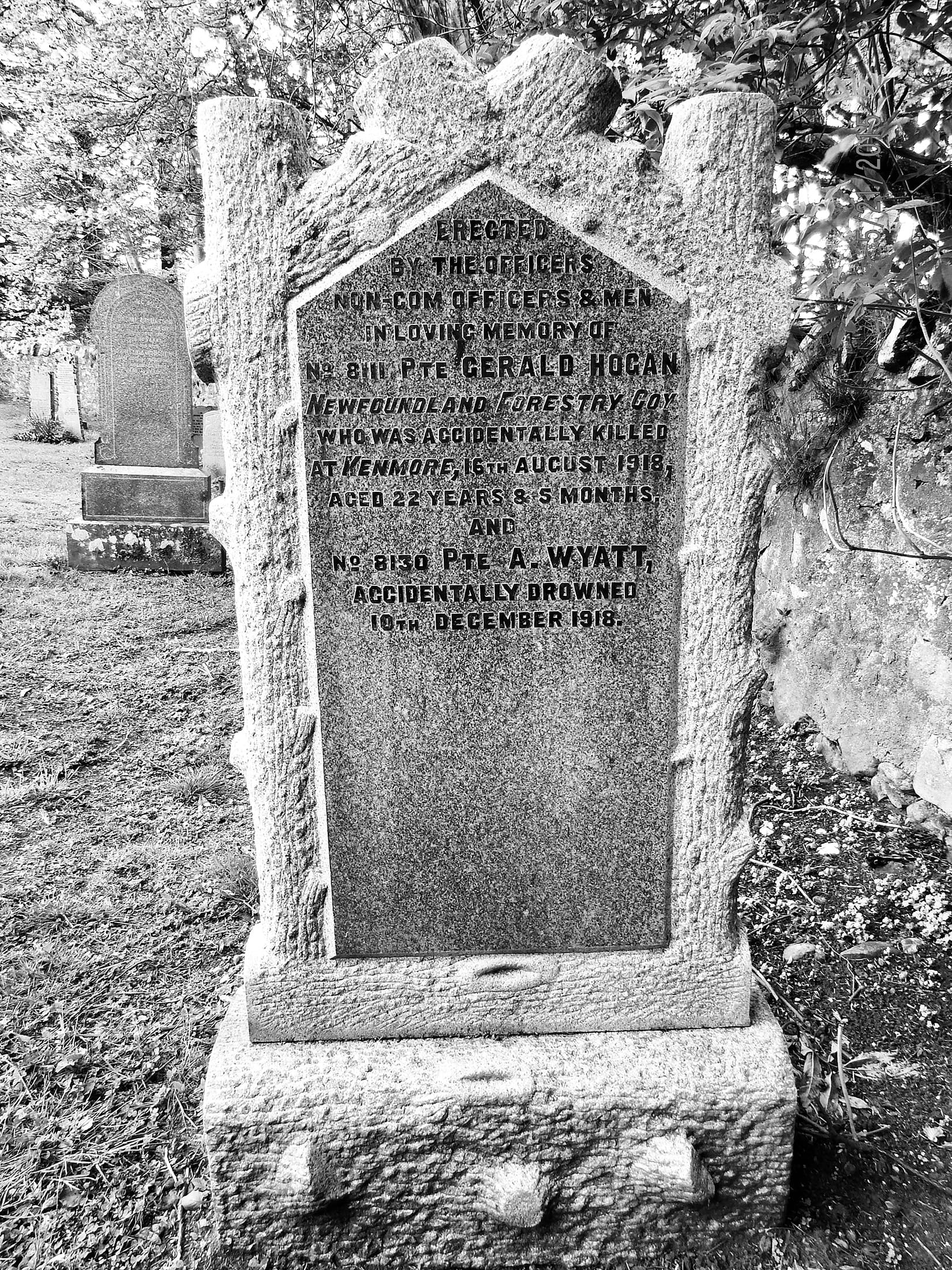
I left Corner Brook on September 11 to visit my home in Aberfeldy, Perthshire, Scotland. My first–time home for twenty-nine years. The personal feelings of seeing friends and my aged parents are beyond description. My father died during my visit and was buried in Kenmore, a spot familiar to the Newfoundland Forestry boys of World War One, at which place they were stationed. While there I visited the graves of No. 8111, Private Gerald Hogan, and No. 8130, Private Arthur Wyatt, and I hope in the near future to have published in the local paper a snapshot of the beautiful headstone which was erected to their memory by the officers and men of the Nfld. Forestry.
Drummond Hill, where the Newfoundlanders worked, has a new growth of forest and presents a beautiful sight. I was at Acharn, passed through Fearnan, around Loch Tay to Killin, visited Fortingall and spent one day at Glen Lyon. There are many Newfoundlanders who will remember these places. I also passed through Dunkeld and Birnam (where the Newfoundland Forestry worked before they went to Kenmore) and got a grand view of Craigvinean, which was also replanted since World War One and is now a large forest.
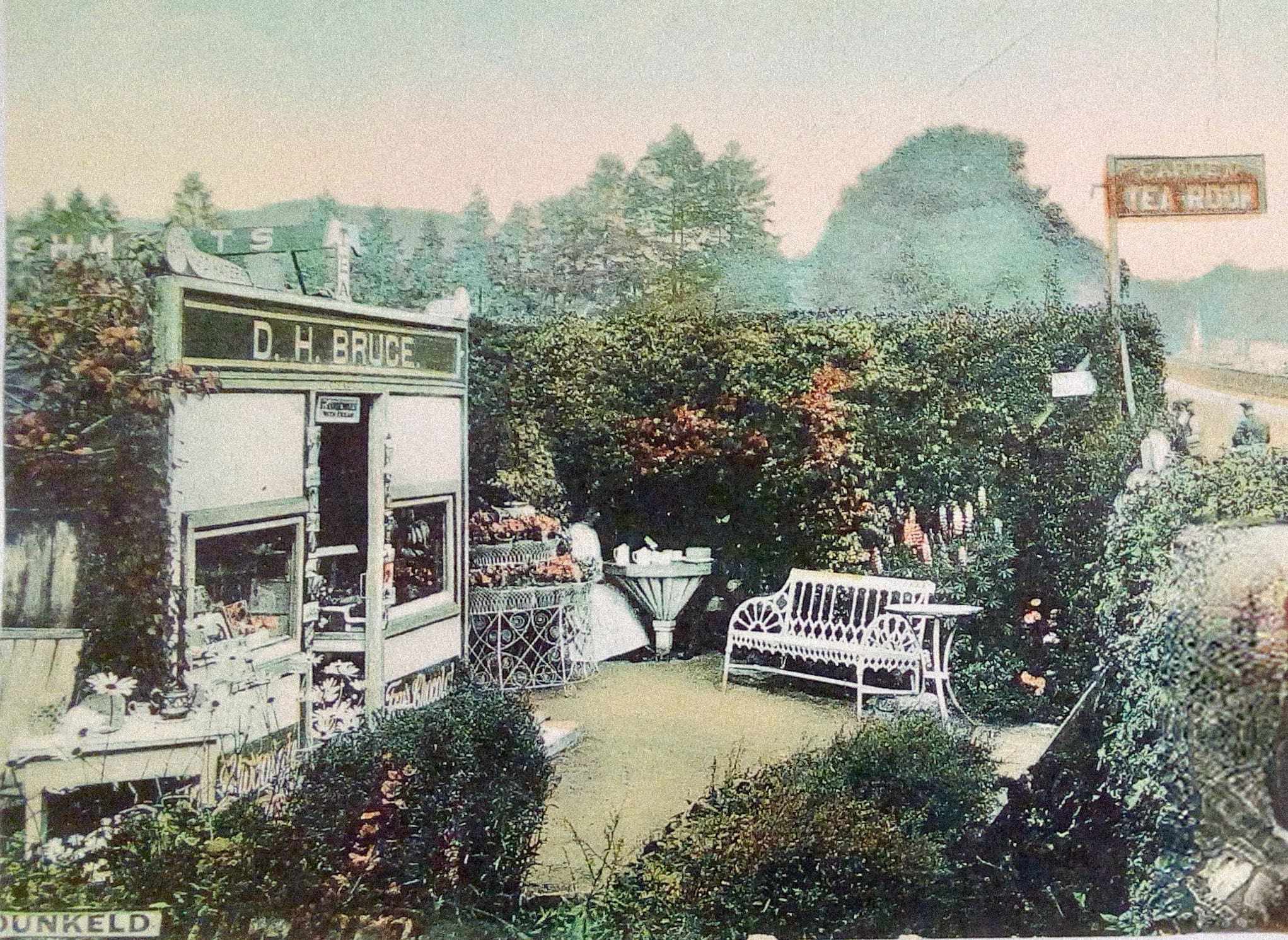
The Garden Tea Room at Dunkeld was a favourite spot for some of the boys and I’d like to say that as I passed through in bus the old sign “Garden Tea Room” is still there.
While at Markinch, Fifeshire, I had the pleasure of visiting the Tullis Russell Paper Mills at Auchmuty and Rothes. They are quite different from the Corner Brook Mills but very interesting. The paper is made mostly from Esparta Grass and Swedish Pulp, which resembles the sulphite stock as made by Corner Brook No. 6 machine. The paper is mostly of a high finish nature . . . .
I left Prestwick on April 26 and our plane grounded at Iceland for nearly two hours. We finally arrived at Gander and then Corner Brook and the end of a pleasant visit to Bonnie Scotland and England.
LISTEN
SCOTTISH WAR BRIDES, HAPPY NEWFOUNDLAND SOLDIERS
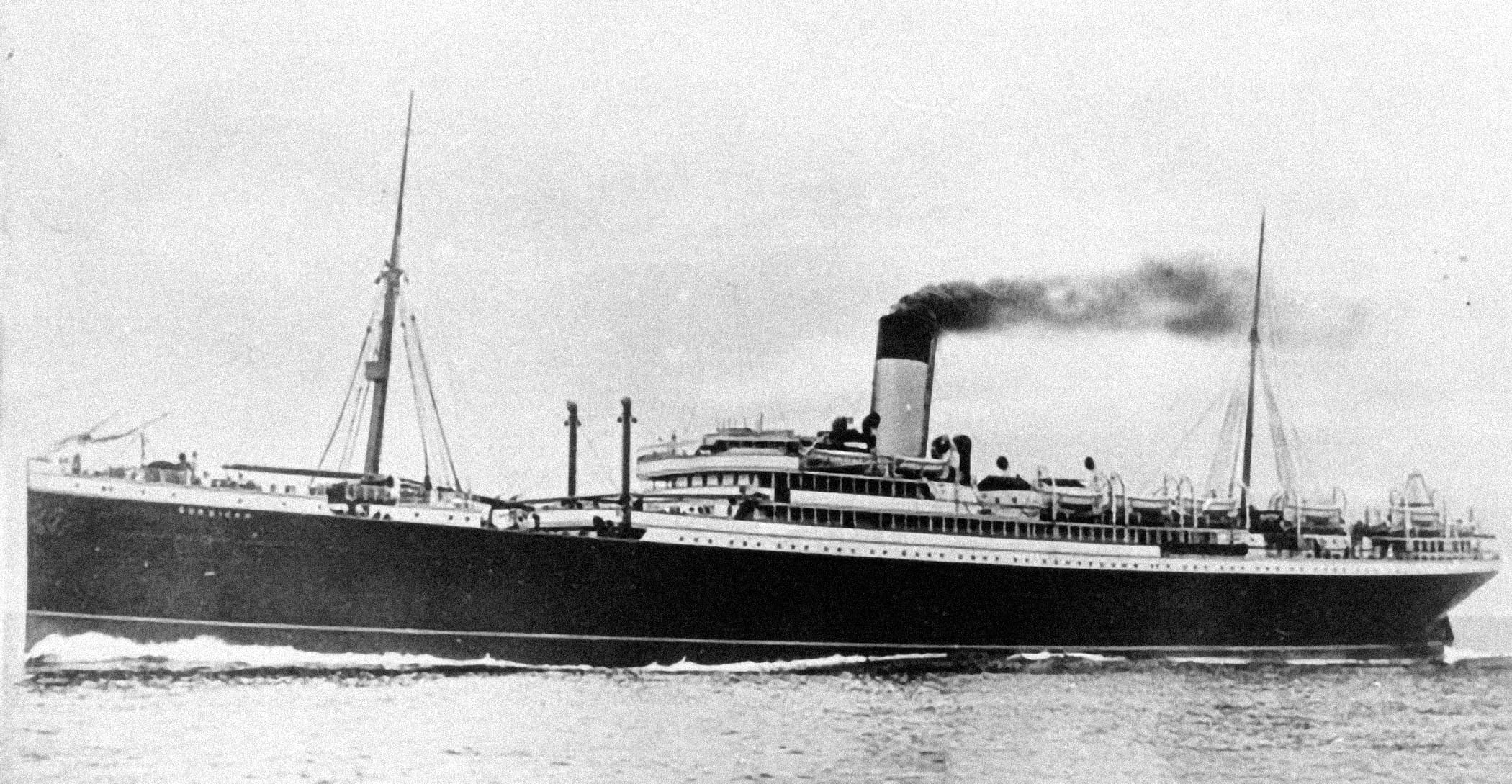
Vociferous good-byes were shouted from the crowded decks of the Canadian Pacific liner Corsican yesterday as she left the Mersey for St. John’s with 1,100 officers and men of the Newfoundland Regiment returning home. All were enthusiastic at returning to their work as lumbermen or fishermen and at the pulp and paper mill of the Anglo-Newfoundland Development Company, at Grand Falls, which supplies The Daily Mail with paper. In Perthshire, several hundred men were working on forestry, and several soldiers were taking back Scotch brides. None was more elated than the newly married couples at the prospects awaiting them in Newfoundland.
LISTEN
LOVE AND ROMANCE CAME TO MANY OF US IN THE GARB OF WAR
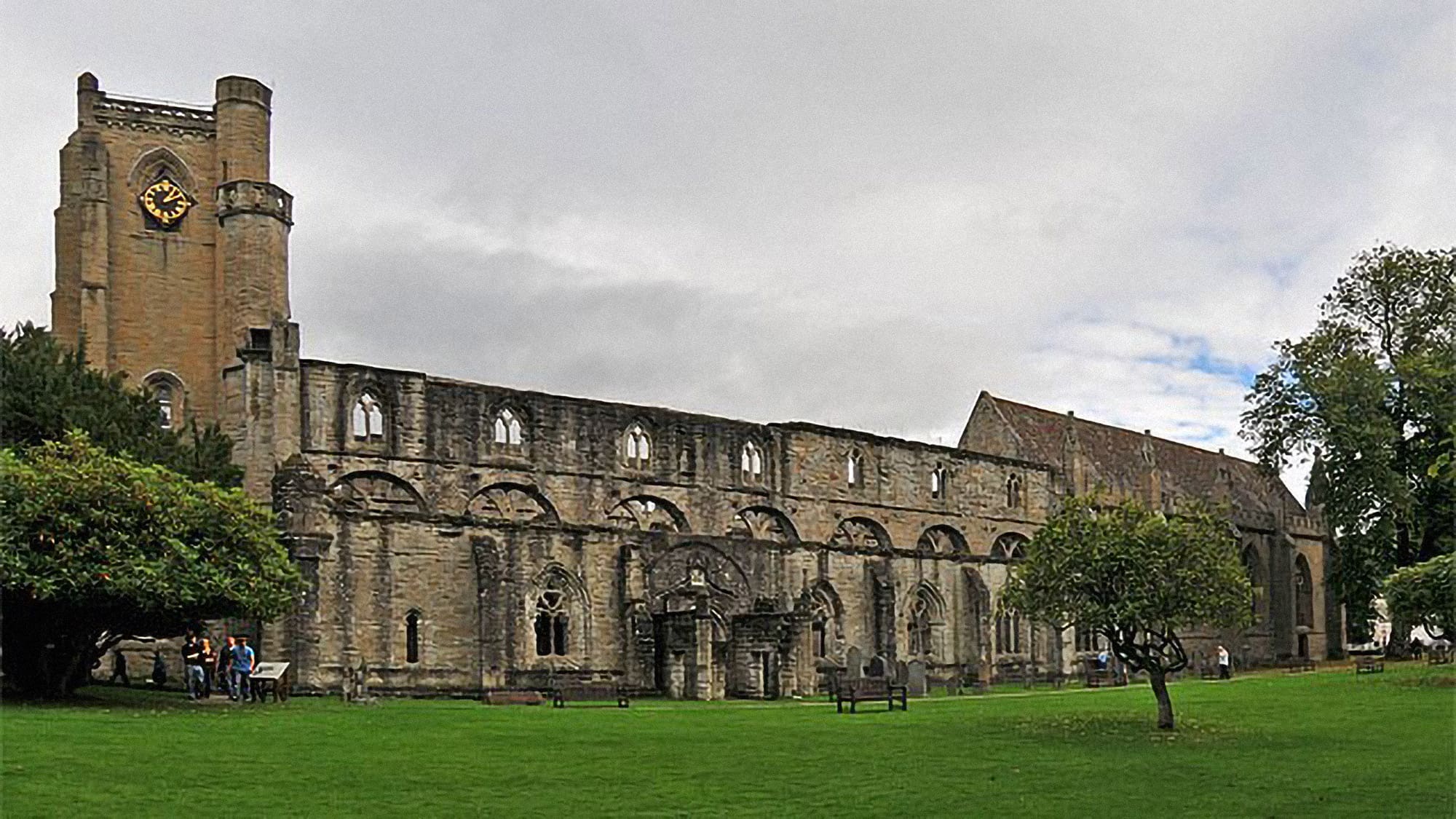
In World War 1, Dunkeld was a recruiting centre, alive with men in khaki. Reveille was sounded in the streets and sentries were posted around the city. Memories come again, this time of tramping feet going, always going . . . . So those years of conflict passed by. But we were young then, and love and romance came to many of us in the garb of war. There were those happy little gatherings in the manse by the river, around the piano singing the old war-time songs. Being seen home—sometimes a long way home. On June 17, 1920, I knelt as a bride beneath the magnificent east window of the [Dunkeld] Cathedral. The strong noble figure of St. Columba, his hand lifted in blessing, seemed to come to life as the sunshine streamed through the stained glass and fell on the golden band on my finger.
LISTEN

DUNKELD REVISITED
Captain Leo C. Murphy (NR #0-35) is remembered for his “Eye Witness” accounts of the Newfoundland Regiment overseas during the First World War. His writings were published widely, including in local papers in Newfoundland. After the war, he often commented on issues related to veterans and war service, as in this piece, written after a visit to Dunkeld in the 1950s.
There are hundreds in the Forestry Companies who knew the Atholl Estates . . . . There are those now showing the silver tinge in their forehead who can recall the old eighteenth-century houses on Cathedral Street and the Cross, Dunkeld . . . . Aberfeldy and Aberdeen are other places familiar to those who served with the NFC. But as far as Dunkeld is concerned, the buildings there were an integral part of Scotland’s heritage and traditions. They bear witness to an era of sterling Scottish craftsmanship and those who served overseas when the strength of the forests helped the British Empire will be glad to know that a lot of the property is being taken over for permanent preservation.
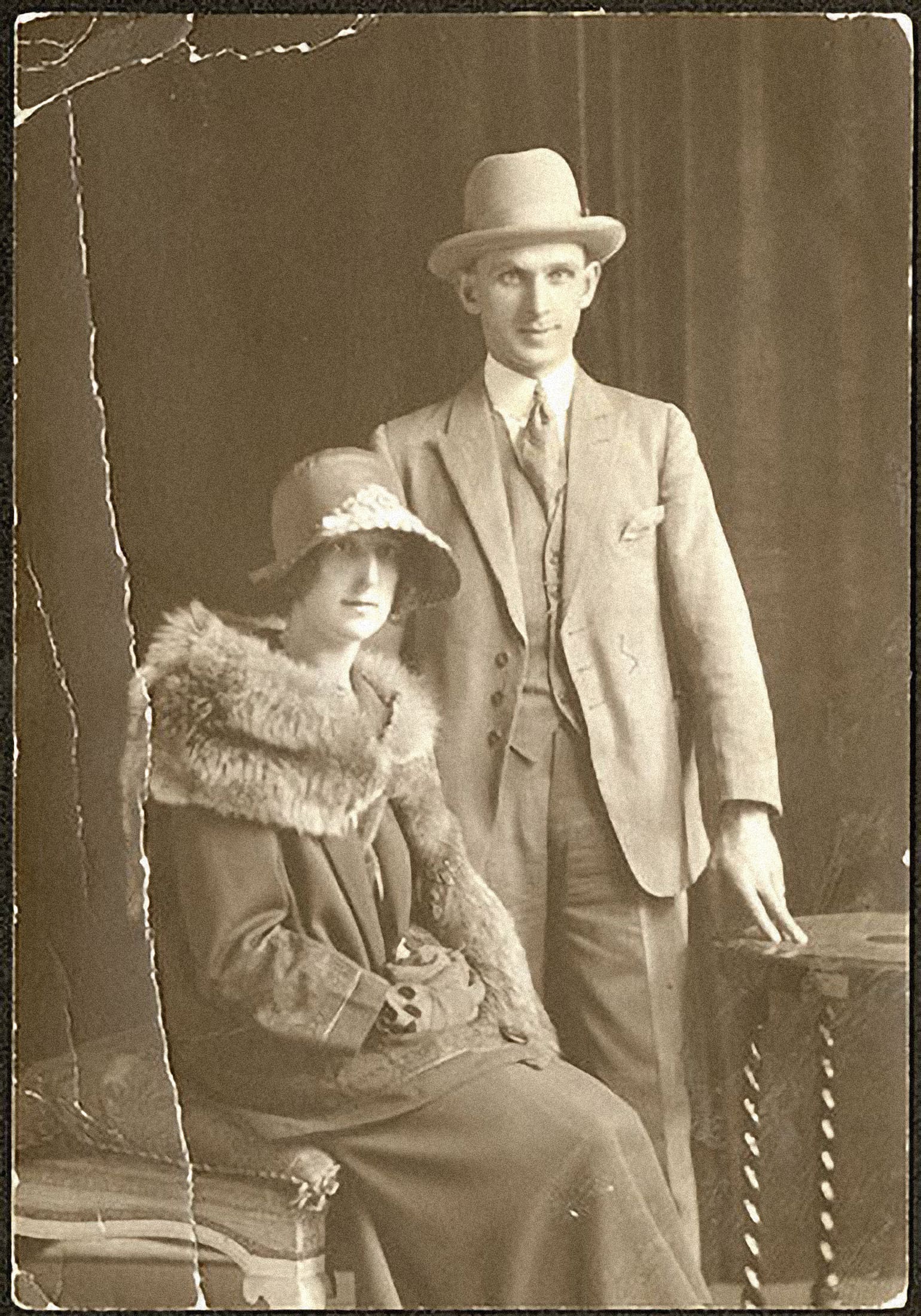
Portrait of a Forester
Frank Stares (NR #1449), Port Blandford, was wounded in the fighting at Beaumont-Hamel. He transferred to the NFC in December 1917. His brother Harry (NFC #8265) also enlisted and was the youngest member of the unit. Frank Stares married Mary Black Young of Glasgow on December 21, 1920. They lived in Glasgow, where Stares worked as a die stamper and sheet-metal worker. Stares died in Glasgow in 1964.