

First
WORLD
WAR
AU REVOIR
AND A
SAFE RETURN
1917: DANGEROUS SEAS
Newfoundlanders and Labradorians were no strangers to sea travel. Coastal boats, not roads, connected outport communities to each other, and the island to the mainland of Labrador. Many men were experienced seafarers who had fished on ocean waters near and far.
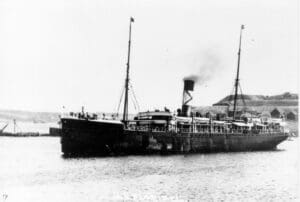
Wartime trans-Atlantic travel was of another order, however. Both sealing ships and passenger liners were converted to troop carriers to take soldiers and foresters overseas during the First World War. Weather at sea could always cause trouble, but German U-boats added even more danger. Ships travelled in convoys with escorts to increase the chances of a safe passage.
The first draft of 99 Newfoundland Forestry Companies soldiers sailed from St. John’s to Halifax, Nova Scotia, on the SS Florizel on May 19, 1917, to join an overseas convoy. A second contingent followed in July that year, and smaller groups travelled the following year.
Look & Listen
A SOLDIER’S FAREWELL
Lyrics by Private Arthur C. King (NFC #8387)
Music by George F. Root
Lyrics published in The Evening Telegram, St. John’s, December 7, 1917
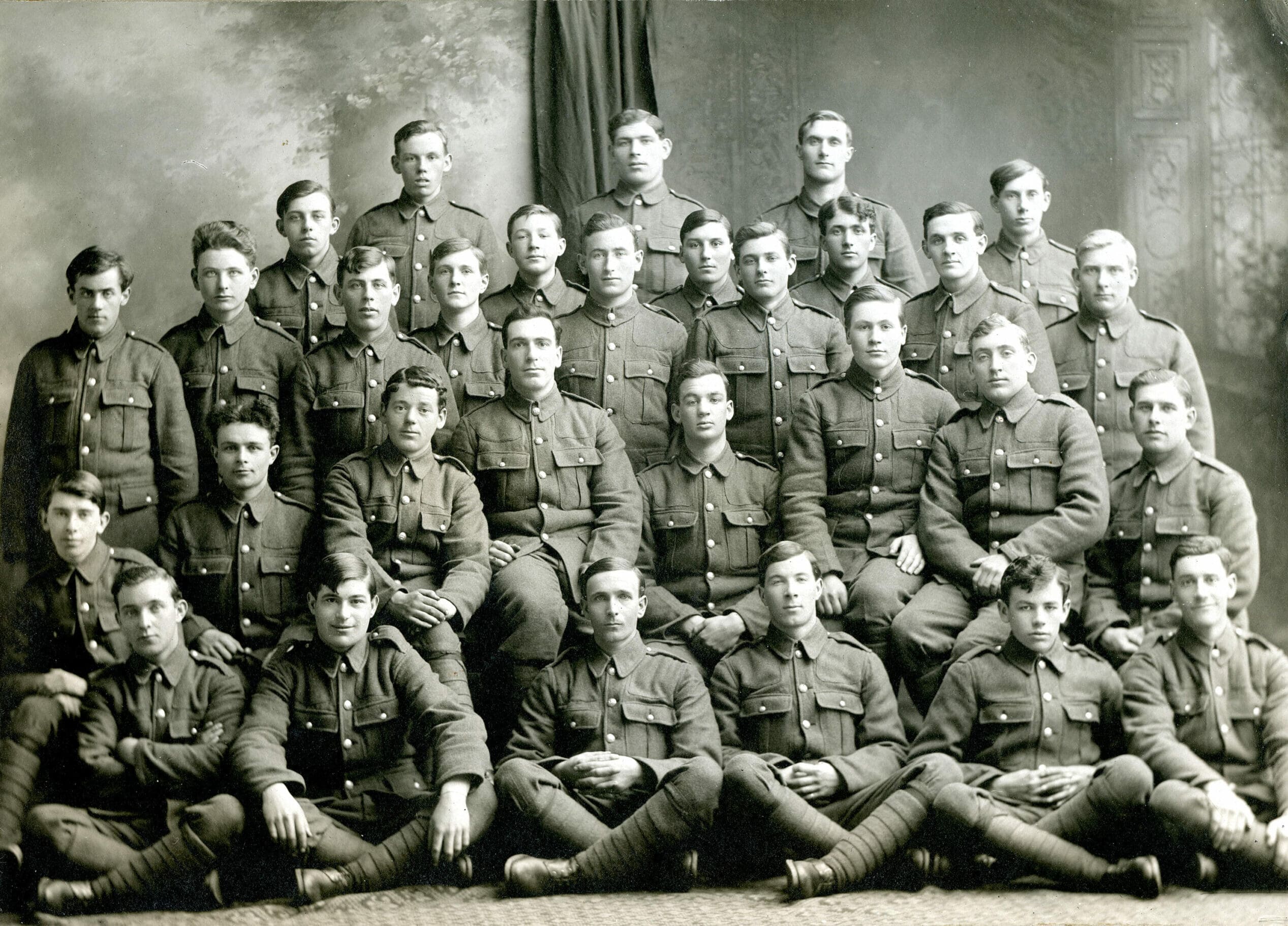
Like most volunteer soldiers, members of the NFC believed in the importance of war service. Many had previously sought combat roles but did not meet the Regiment’s requirements. They showed their commitment to the war cause in ways beyond enlisting, such as encouraging others at home to sign up.
In “A Soldier’s Farewell,” Private Arthur C. King (NFC # 8387) of Grand Falls, Newfoundland, pleads with those who have not enlisted to listen and act “when your King and Country call you.” The melody is based on a song by George Root called “Just Before the Battle, Mother.” Listen to a choral arrangement of the song performed by Newman Sound Men’s Choir.
The video opens with a long shot of the inside of a church. A men’s choir stands near the altar, its members in dark suits and bow ties. Closeups of the men’s faces and the choir seen from many angles are interspersed with a few historic photographs (of foresters overseas) as the song is sung.
[Men’s choir singing, accompanied by piano]
Just before I leave you, mother
I must bid a fond farewell
Where I’m going I cannot tell you
But I hope ’twill all be well
’Tis a call from King and Country
And my duty is to go
Though it breaks my heart to leave you
For I find it hard you know.
Good-bye, mother; farewell, father
I must say good-bye to you
When away from home and loved ones
I will always think of you.
When my training here is over
And my duty here is done
I must leave the dear old homestead
For to battle with the Hun
When the bugle sounds the “Fall in”
I’ll be ready for to go
When my King and Country call me
Across to Flanders then to go.
When we sail across the ocean
And are tossed about the sea
And I know my mother’s praying
For her boy upon the sea
When on Foreign Fields I’m roaming
Far across the ocean foam
With my eyes towards the Heavens
Leave, ah leave me not alone.
Now my friends are left behind me
Oh get ready now and come
Yes! Your King and Country call you
Men of War to face the Hun
Come on, boys, and don’t be cowards
Join the colours right away
Fill the place of them that’s falling
Do it now and don’t delay.
Performed by Newman Sound Men’s Choir
Jennifer Hart, Artistic Director
Leslee Heys, Collaborative Pianist
Soloists: Noah Williams, Daniel Browne, Hugh Donnan, Glen Chafe
Melody “Just Before the Battle, Mother” by George F. Root, c. 1862
Lyrics by Arthur C. King, 1917
Arranged by Leslee Heys, 2023
Audio recording and editing by Steve Lilly
Videography by Chris Crockwell
Video production by Perfect Day, 2023
Created for “Axes for the Allies: Th Wartime Foresters of Newfoundland and Labrador” by Ursula Kelly and Meghan Forsyth, a website funded by Digital Museums Canada, a division of the Canadian Museum of History
Filmed in the Anglican Cathedral of St. John’s the Baptist, St. John’s NL (Canada)
Archival photos courtesy of the Dunkeld Community Archive, Dunkeld, Perthshire, Scotland
JOHN BARRETT: THE FORESTERS’ SCRIBE
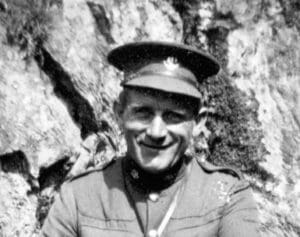
John A. Barrett (NFC #8028) of Birchy Cove (later Curling) was aged 43 and unmarried when he enlisted with the Newfoundland Forestry Companies at St. John’s on April 20, 1917. He was assigned the rank of Corporal and sailed for Scotland with the first draft of foresters less than a month later.
During the NFC’s time in Scotland, Barrett performed many jobs—quartermaster, storekeeper, ration corporal, and orderly. He was a career journalist before the war, so he was also assigned the role of NFC press correspondent. As part of this work, Barrett wrote letters to Newfoundland newspapers describing the work of the overseas foresters. His accounts provide invaluable details about the unit during its time in Scotland.
Barrett was promoted to Regimental Quartermaster Sergeant on February 11, 1919, at Kenmore, Scotland. He left there in early June 1919, assigned to the Pay and Record Office in London. On August 4, 1919, he was demobilized at St. John’s.
In 1920, John Barrett married the poet Ena Constance Culbard at Dunkeld. The couple lived long and full lives in Newfoundland and made lasting contributions to their community and country. John died in 1955, Ena in 1967.


“So, boys, enlist right away and come over to the help of your King, your Country, and your homes.”
FIRST LETTER FROM OUR FORESTERS
July 2, 1917
Dunkeld, Perthshire, Scotland
Dear Sir,
In all probability the friends and relatives in Newfoundland of “A” Company, Newfoundland Forestry Companies, are anxious to know how we are getting along; so, on behalf of the “boys,” I send you a brief letter with the hope you may give it publicity.
The morning of our departure from the Homeland was a memorable one for all. The crowds waving farewells and bidding “Bon Voyage” stimulated the lads so that the embarkation was conducted with lightheartedness. Some of the Company left home and were upon the ocean for the first time. It certainly was a change for them to look out upon such a broad expanse of water and watch their native land recede from sight.
On the way to Canada, where we later joined another transport, we had a jolly good time. The ship’s officers were very attentive and looked after our requirements in good style. We were all pleased with the manner in which the catering was carried out. Major Carty, who was in command, Captain Baird, and Lieutenants Cole and Harvey, were untiring in their efforts on behalf of the Company, and instituted various games by way of amusement for us.
Whilst in Canada we had the customary routine work and parades, and some of the boys were given furlough to enable them to visit friends. Altogether a very pleasant time was spent there.A large ocean liner of nine decks, the speed of 24 knots, called there for us; and together with a goodly number of Canadians we embarked for England. There were about 6,000 troops on board when we put out to sea, all of whom were comfortably quartered on the great liner.
Perfect weather and a smooth sea favoured us all the way across; and a fortunate thing it was, as many of the Canadians had never seen salt water before, much less having been on it. Physical exercises and route marches were indulged in every day, and thus the time passed pleasantly for all.
Great precautions for saving of life were taken on board ship, and from “revelli” to “lights out” all the troops (officers included) wore life belts. It looked rather odd to see so many men wearing cork yokes around their necks parading the deck. Every day an alarm was sounded; then the troops took up their appointed stations, the water-tight compartments were closed, and the boat’s crews stationed at their respective places. Daily, a strict lookout was kept for enemy ships, as it was understood a large reward was offered the Commander of the submarine that would sink us. Few ships were met but when one was sighted, great excitement prevailed. When two days from this side, we were met by an escort of torpedo boat destroyers. They were soon recognized as American ships, and the fears of all were greatly alleviated. This patrol accompanied us beyond the danger zone, and shortly after we dropped anchor, two of them steamed by. Such an ovation as was tendered the “Stars and Stripes” by those on the troop ship has seldom been given anywhere.
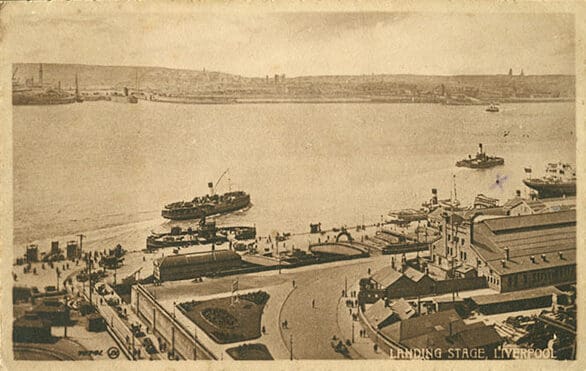
At the port of disembarkation [Liverpool] we were kept aboard all day, awaiting necessary preparations for railway transportation. Thousands of people visited the dock and probably thirty thousand more crossed on the ferry boats from various landings to bid a hardy welcome to the khaki, who had come so far that they may be of use and assistance to the Mother Country in this hour of her need.
It was a glorious Sunday morning when we entrained, and our Company moved out with light hearts for the land of the thistle and heather. The railway journey to Ayr was a short one, a brief stop being made at Carlisle to change engines. The scenery along the route was magnificent; in fact, it seemed as if we were passing through an immense park all the way. Men, women and children enthusiastically greeted us as we passed through the city, town, and village. As we drew over the Scottish border, the country in places was a little more irregular and broken, forcibly reminding us of sections of Newfoundland; only the grandeur of it all was somewhat different.
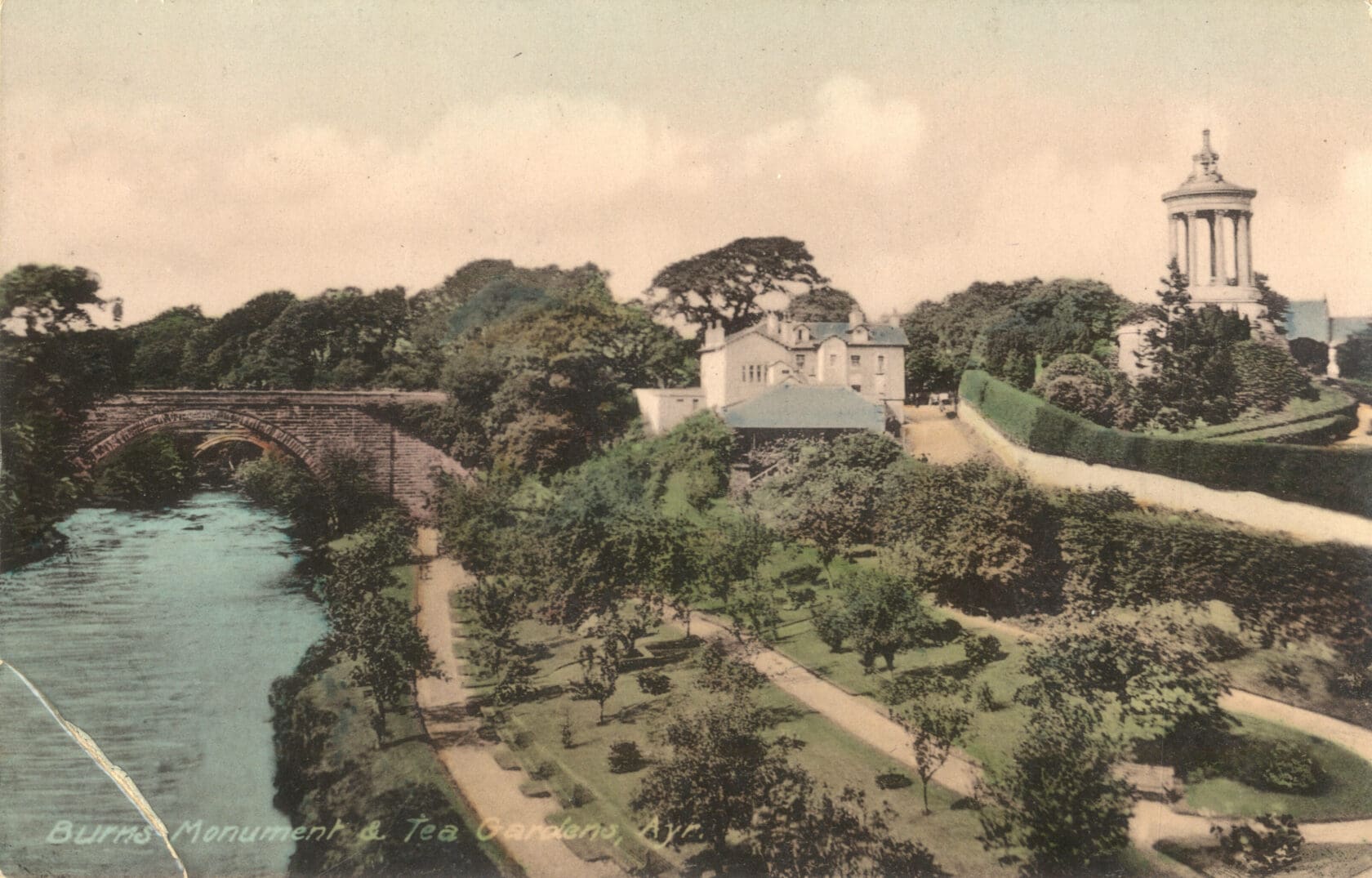
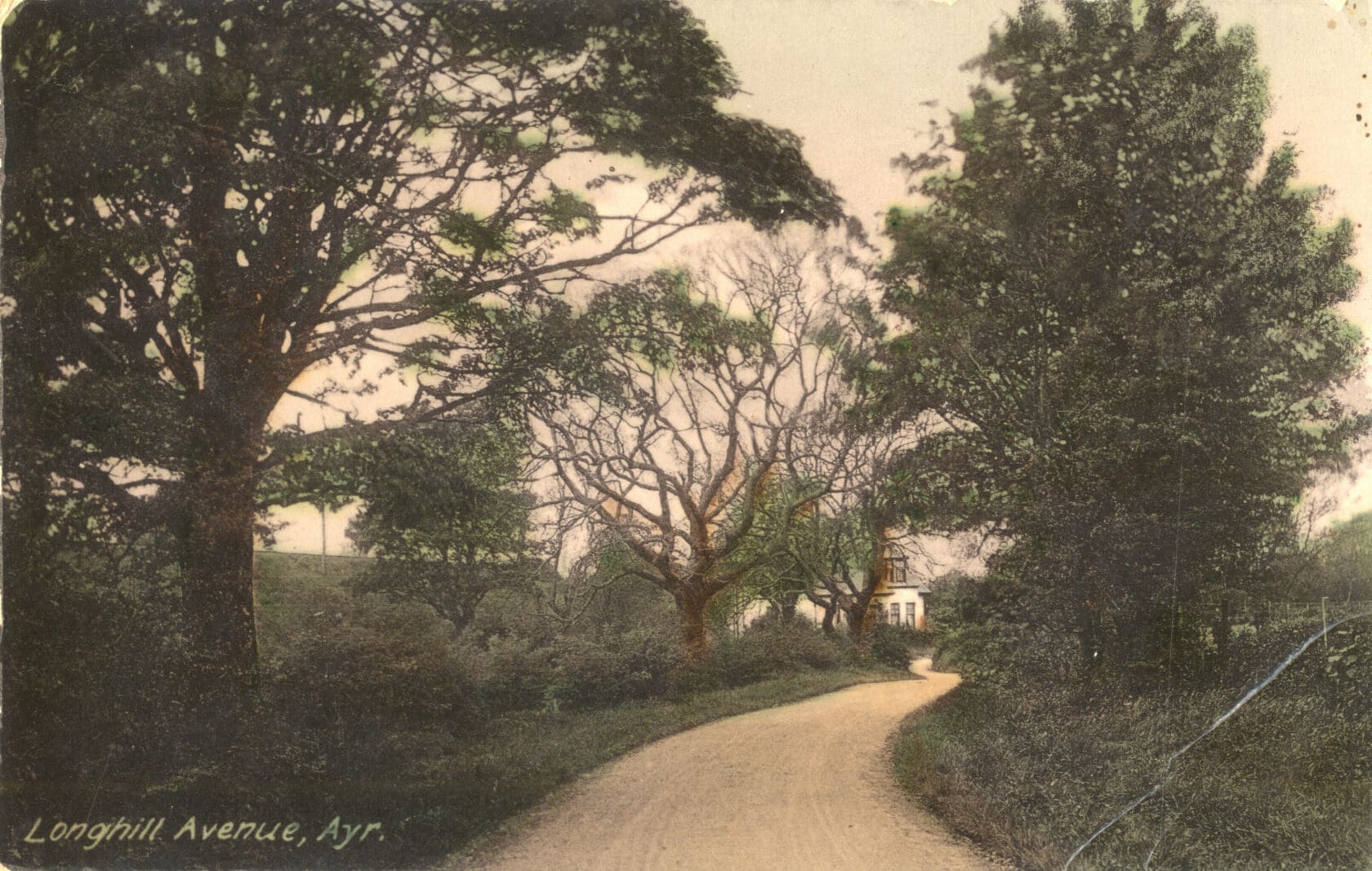
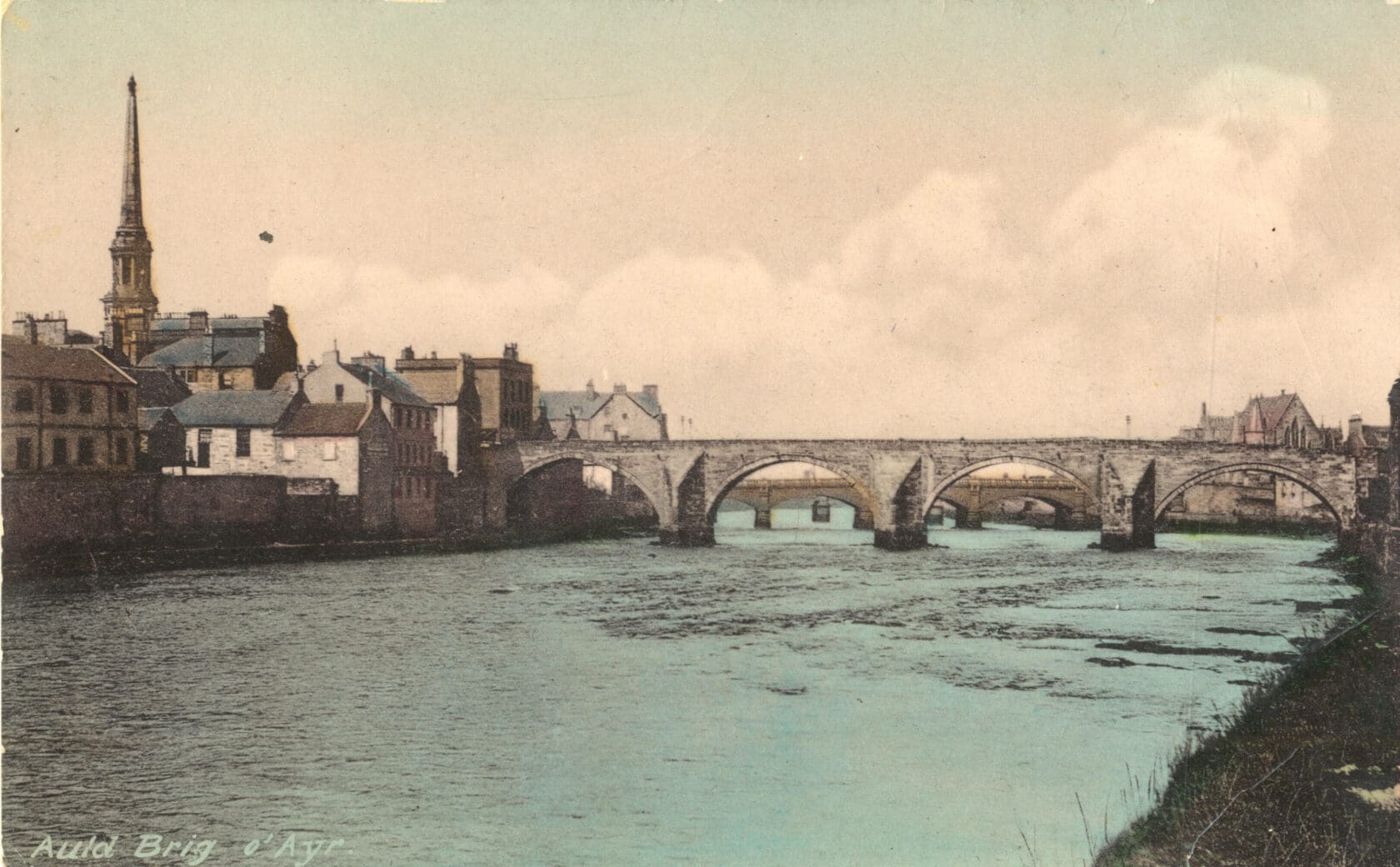
Upon arriving at Ayr, we were met at the station by officers and men of the First Newfoundland Regiment, who accompanied us to the quarters at the Race Course. There we were given over to the care of Lieutenant [Kenneth] Goodyear, and, after refreshing the inner man, we were soon tucked away beneath our blankets. We spent a very pleasant fortnight at Ayr, and enjoyed the change immensely. Ayr is a little watering town on the west coast of Scotland, and is quite a romantic place owing to Robert Burns, the poet, being associated with its history. The River Ayr, River Doon, Tea Gardens, Burns’ Monument, Burns’ Cottage, Long Hill Avenue, and several other beauty spots, are worthy of a visit by anyone going to that town. It is a very cleanly and well-kept place. The people are very kind and sociable and do not exhibit any aristocratic traits. The great stretch of sandy shore along the waterfront from the harbour to the River Doon is the centre of attraction on fine days.
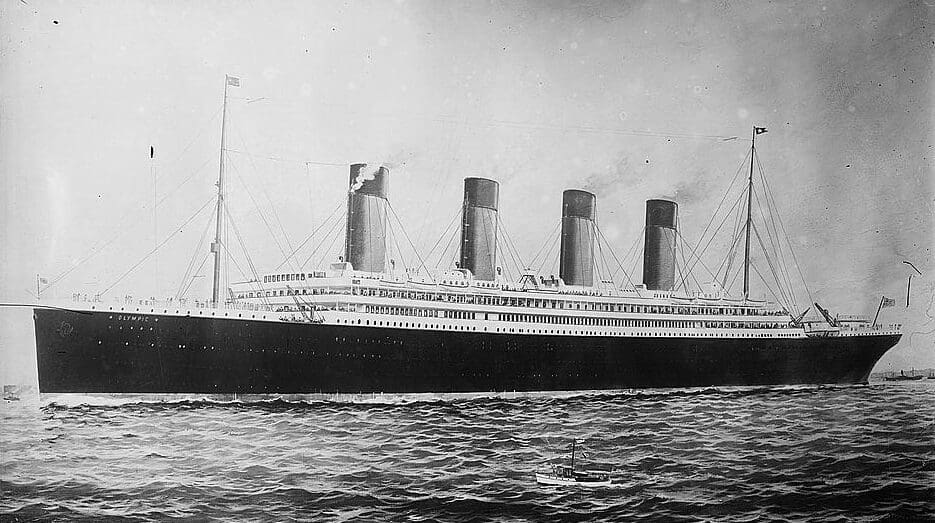
We moved out from Ayr on the morning of June 25, arriving here [at Dunkeld] in the afternoon, and again went under canvas. We are located in a beautifully wooded section of the country where the timber is of fair growth, and very accessible. A good road leads right up from the railway station to the sawmill and around the belt of timber where we are to operate. Several horses and equipment have already reached us, and houses are being erected for officers, men, and equipment.
The men are charmed with the country, as it excels anything we expected to see. We are being well-looked after by the officers, who are doing everything possible for our comfort and welfare. There is a good supply of provisions for all, and we are being well-fed. A canteen has been opened here by the mill; a milkman brings a supply of “white fluid” every morning; and besides the supplies procured here, our field rations are being forwarded every day. There is no cause for complaint on any account. In case of rainy weather, the men will be supplied with oilskins, similar to those used at home.
The estate upon which we are located belongs to the Duke of Atholl, and is a very extensive one. The beautiful River Tay runs through it, and from our camp we can look down upon its water and think of happy days spent canoeing on the rivers of Newfoundland. The scenery in this vicinity is majestic, presenting in some respects the wild grandeur of Bay of Islands. Red deer, roe deer, fallow deer, ptarmigan, rabbits, hares, and other game are plentiful here, and we frequently see some of them quite near the Camp.
About fifteen miles to the eastward is the pretty little town of Coupar Angus, the home of the late Sir R. G. Reid, the builder of the Newfoundland Railway.
Mr. Beeton, well and favourably known at Grand Falls, has visited us and spoken very kindly and encouragingly to the men, promising them his unstinted aid and support. All were pleased to see him, more especially those who familiarly remembered him at Grand Falls.
No doubt there are a number in Newfoundland who feel inclined to enlist in the Forestry Companies but are holding back to hear how we are progressing. If such is the case, they can take my word for it that they would never regret the action. There is room and work for thousands of foresters over here; so, boys, enlist right away and come over to the help of your King, your Country, and your homes. Don’t wait until a later date, but let your slogan be “Do It Now.”
Yours respectfully,
J. A. Barrett
Newfoundland Forestry Companies
LISTEN
“The men are charmed with the country, as it excels anything we expected to see.”
John Barrett’s letters and an account of the unit’s formation and service are published in The Foresters’ Scribe: Remembering the Newfoundland Forestry Companies Through the Letters of Regimental Quartermaster Sergeant John A. Barrett by Ursula A. Kelly.
A VOYAGE AT CHRISTMAS
One NFC draft departed for Scotland in early December 1917. Their voyage is described in this essay below. As often happened, their route included a stopover in Halifax where a convoy was forming for the voyage to the UK.
Shortly before the men arrived, two ships collided in Halifax harbour and the resulting explosion killed about two thousand people, injured nine thousand, and destroyed a large part of the city. During stopovers there in the months that followed, members of the Regiment and the NFC participated in efforts to clean up the devastated city. Lieutenant M.J. Nugent, from Grand Falls, Newfoundland, wrote about what he saw on such a trip. His essay is excerpted here.

Some few days after the Halifax explosion of December 6, 1917, the good ship Florizel left St. John’s having on board a draft of troops for overseas. This consisted of two companies of the Forestry Battalion under the command of Captains Josiah R. Goodyear and David J. Thistle, hereinafter known as Joe and Dave. There were also some eighty other ranks for the Regiment. The whole was under command of Captain J. J. O’Grady (Jerry), with myself as junior sub. The M. O. was the urbane and scholarly Dr. Brehm.
The voyage to Halifax was in the teeth of a NW moderate gale with snow squalls and many of the troops in consequence paid due tribute to Neptune. Owing to the disaster at Halifax the troops had to be disembarked and conveyed to Saint John [New Brunswick] for accommodation pending the making up of the convoy.
Unfortunately, on the voyage to Halifax, Sergeant John Sheehan, one of the Old Blue Puttees, who had been gassed in France and was now proceeding overseas with the Forestry Companies, developed pneumonia and had to be sent to hospital.
Entraining at Halifax, amidst the still burning ruins of the railway station, we reached Saint John in due time. There the troops were placed in comfortable quarters and the officers found lodgings in the George Hotel. While there we met Dr. Walter Scott of Grand Falls, who was serving with the great Sir William Osier as bacteriologist in the East Command at Colchester and was returning to England after home leave.
THE VOYAGE STARTS
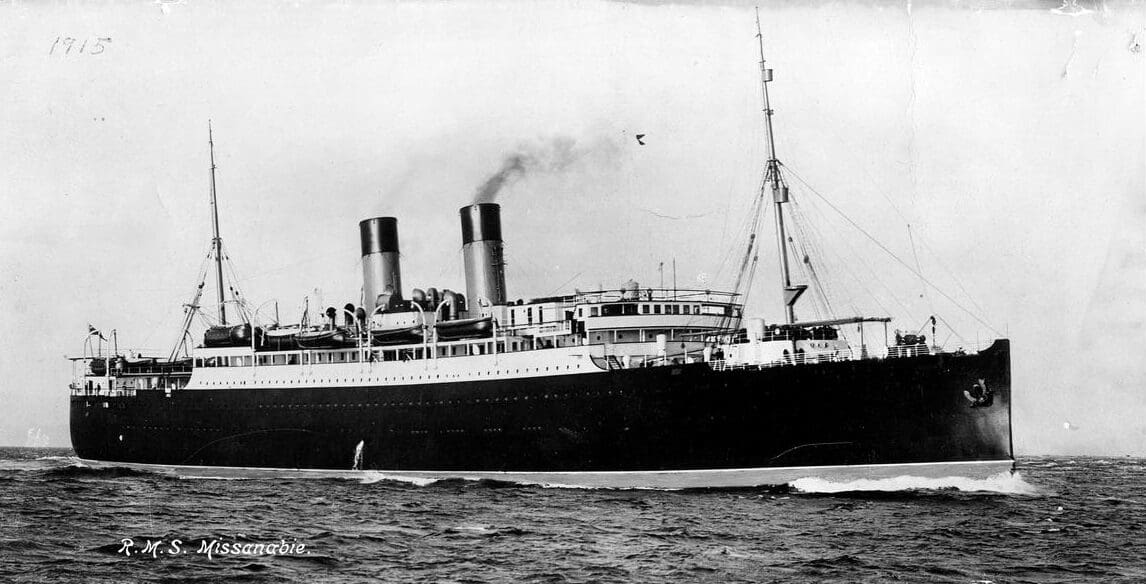
On the arrival of the western troops, all were embarked on the two ships, Missanabie and Calgarian, which latter was the armed cruiser for the convoy. Among the western troops were a number of trained nurses and several young aviators from U. S. Flying School at Chicago.
We picked up the other ships of our convoy from New York at Halifax and by Christmas Day were nearly at mid-Atlantic.
Christmas Day broke very stormy, so much so that our fleet, which had been travelling at three miles apart, were now ordered to five, and of the four hundred-odd first class passengers, there were only fifty down to dinner. However, the party at our table were all present and correct, a few toasts were drunk and thenceforth on all entered to the spirit of the occasion.
ALL WERE SEASICK
After dinner (the midday meal) a visit was paid to the troops. Most were horribly seasick and though the dinner provided was good, very few had eaten anything. A visit was therefore paid to the main dining saloon again where the chief steward was interviewed. He was very tired, as on account of the rough weather most of his stewards were sick, and he had to tend table himself.
In a few minutes a corporal and twelve men were ordered, who were supplied with the most dainty bits that could be provided for the men. The Chief was so impressed that he presented us with a bottle of special whisky for our cabin to drink the health of the ship’s company, with the flattering remark that we appeared to be the only officers onto our job that day.
In the meantime one of the ships had been torpedoed, and on leaving her, a funnel fell and killed one of his stewards. So you see the Mercantile Marine did their bit and paid their price during the big scrap.
A Splendid Sight
After Christmas the weather moderated considerably and by the time the coast of Ireland was in sight it was quite pleasant. Some distance off we met the destroyers of the Atlantic fleet, mostly Americans based on Galway. It was a heartening sight to see them come towards us now, lifting with a gentle roll, going at top speed with a smother of foam all round and cutting around us for all the world like well-trained setters quartering the ground on the barrens. It made even the most anxious more cheerful, and by next day all were in the best of humour.
Next day we passed the Giants’ Causeway in full view and proceeded on our course to Liverpool. But “there’s many a slip,” and that night we were ordered back to Lough Swilly owing to the presence of two submarines in the Irish Sea, evidently waiting for the convoy.
The following morning we weighed anchor and proceeded to Glasgow, with its miles of shipyards on either side from which could be heard the unceasing din of hammers and rivetters feverishly endeavouring to replace the many thousands of tons of shipping destroyed by the enemy submarine campaign.
On New Year’s Eve (Hogmanay Night) we landed at Glasgow. Here we took leave of some of our friends, old and new. The Forestry men proceeded north to their destination, while the Regimental draft entrained for Ayr. And so ended one of the many voyages which some of us had to make in the performance of our duties during those hectic times.
– The Veteran, December 1938
LISTEN

THE GOODYEAR FAMILY
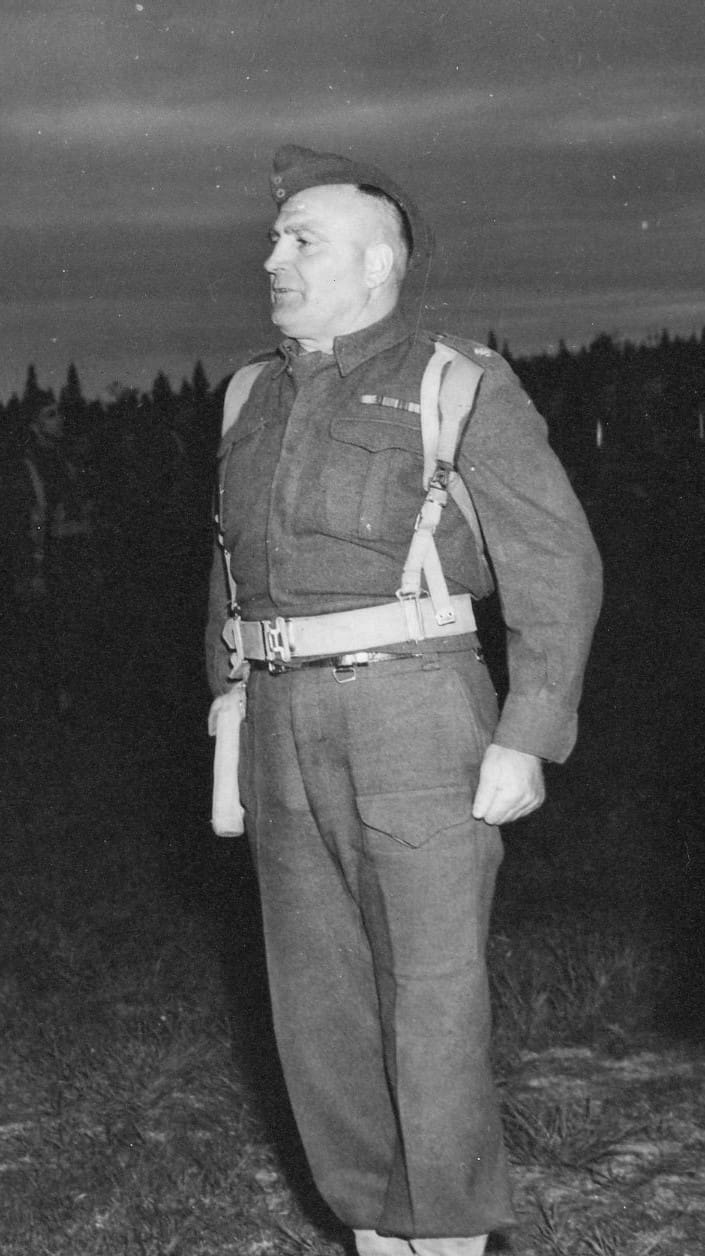
Many Newfoundland families had more than one member serving in the Great War, including the Goodyear family of Grand Falls. Josiah and Louisa Goodyear had moved there from Ladle Cove, Bonavista Bay, in the early twentieth century, soon after the town began to grow up around the Anglo-Newfoundland Development Company’s pulp and paper mill.
The Goodyears established businesses and were well-known and respected. Josiah and Louisa had seven children, and when war broke out, they were eager to serve. Three sons—Raymond, Stanley and Hedley—enlisted early in the Regiment and were killed in action. A daughter, Daisy (better known as Kate), a nurse with the Voluntary Aid Detachment, was en route overseas when the Armistice was signed. Son Roland maintained the family businesses, including J. Goodyear and Sons, during the war. Kenneth (Ken, NR #1193) and Josiah (Joe, NR #573) Goodyear served with distinction in the Newfoundland Regiment. They transferred into the NFC after being wounded in combat. Lieutenant H. Kenneth Goodyear (NFC #0-74) transferred on June 11, 1917, and Captain Josiah Goodyear (NFC #0-113) on July 23, 1917.

The Danger Tree: Memory, War, and the Search for a Family’s Past by David Macfarlane, grandson of Captain Josiah Goodyear, gives an account of the Goodyear family.
TRAVEL IN LABRADOR
The difficulties of travel in the northern areas of the island of Newfoundland and mainland Labrador created obstacles for recruitment and enlistment, but they did not deter the enthusiasm of those who wanted to serve.
One extra challenge for recruits was being repaid for their travel expenses. Receipts were rarely issued by transportation services. So community leaders (a doctor, nurse or teacher) sometimes wrote on behalf of soldiers, to make their case for reimbursement.
In a letter to the Minister of Militia, which a teacher in his home community transcribed for him, Stephen McDonald (RNR #6103) described how he and two comrades returned to Labrador while on leave:

I live as far north as Cartwright in Sandwich Bay, Labrador. The Regiment paid my passage from St. John’s to Humbermouth and from there to Battle Harbour, and the rest of the way I paid out of my own pocket, and I could not afford that; I was dead broke when I reached home.
Enclosed you will find a bill from Fequet for dog team. I had to work the most of that out. Enclosed, sir, you will please find bill showing amounts I paid out of my own pocket to get home.
- For food, stove, tent, etc. at Battle Harbour – 11.00
- For board at Fox Harbour – 10.50
- For hire of one dog team from George’s Cove to Gilbert’s Neck – 3.00
- For hire of one dog team from Gilbert’s Neck to Otter Bay – 9.00
- For board at Humbermouth while waiting for the steamer Ethie to depart – 7.20
- For hire of one dog team from Otter Bay to Cartwright – 25.00
LISTEN
Dr. Harry Paddon was a medical doctor with the International Grenfell Association. Based in Labrador, he sometimes wrote letters on behalf of soldiers. He called the costs of travel these men paid to volunteer their services for the war “a tax on patriotism,” since they were “landed 300 miles from home and left to bear all the expenses subsequent.” In this case, Dr. Paddon’s follow-up appeal to the authorities was successful and the three soldiers were eventually reimbursed for their travel expenses.
