Second
World
War
IT WASN’T
ALL WORK
LIFE, LOVE AND LEARNING
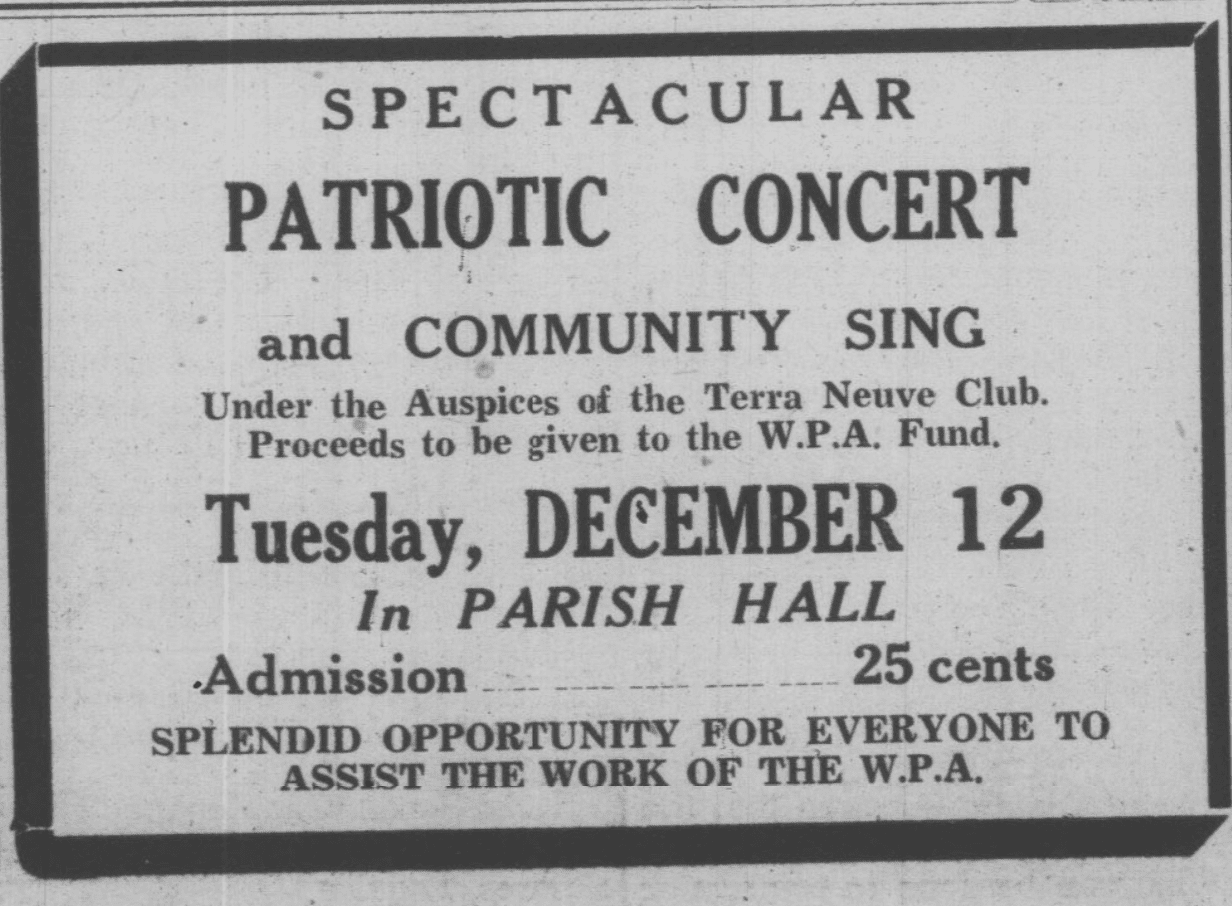
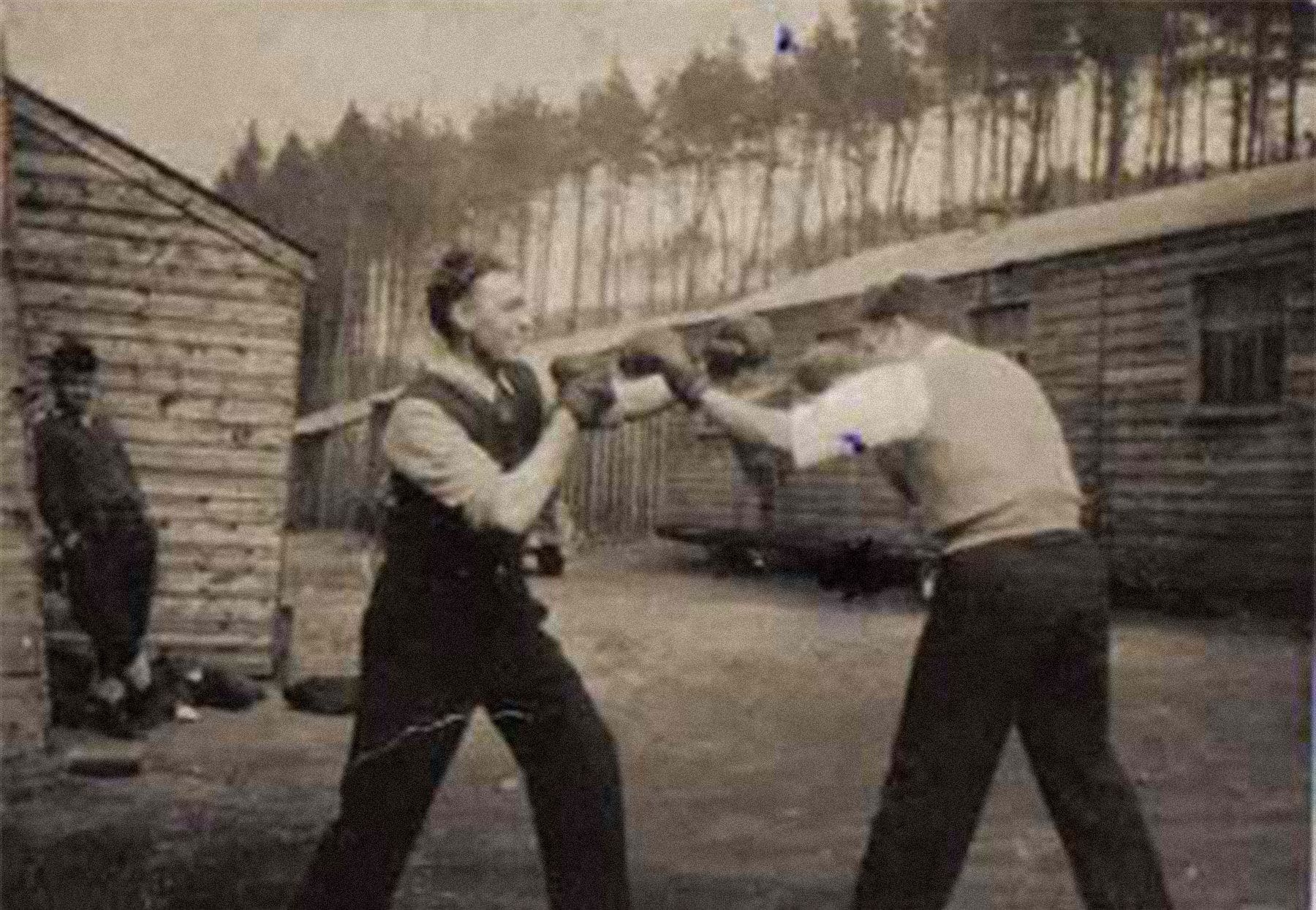
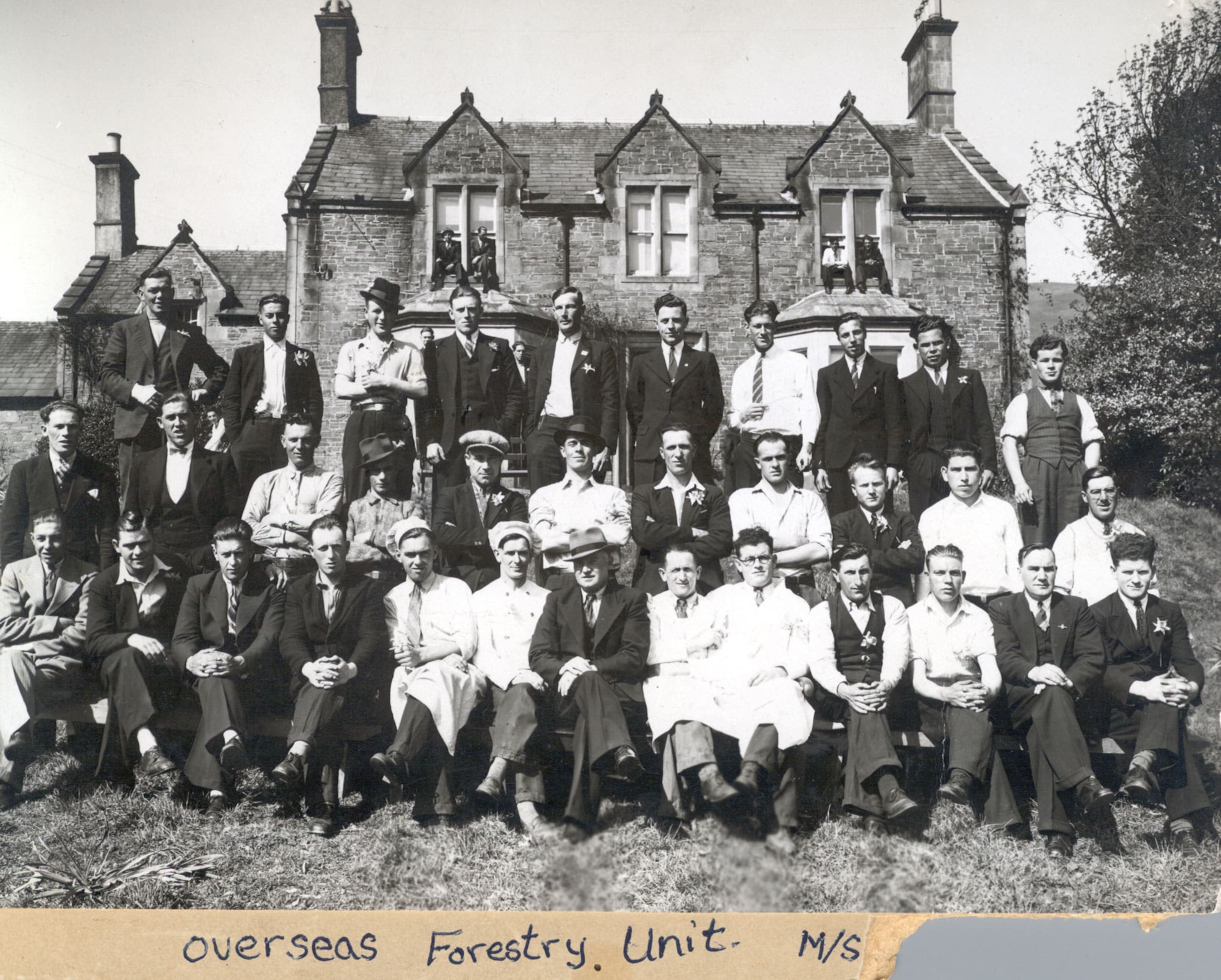
Outside of their work hours, NOFU members were fully immersed in the communities near their camps. They went to local church services, fundraising events, dances and socials. They supported charities and often hosted their own patriotic events.
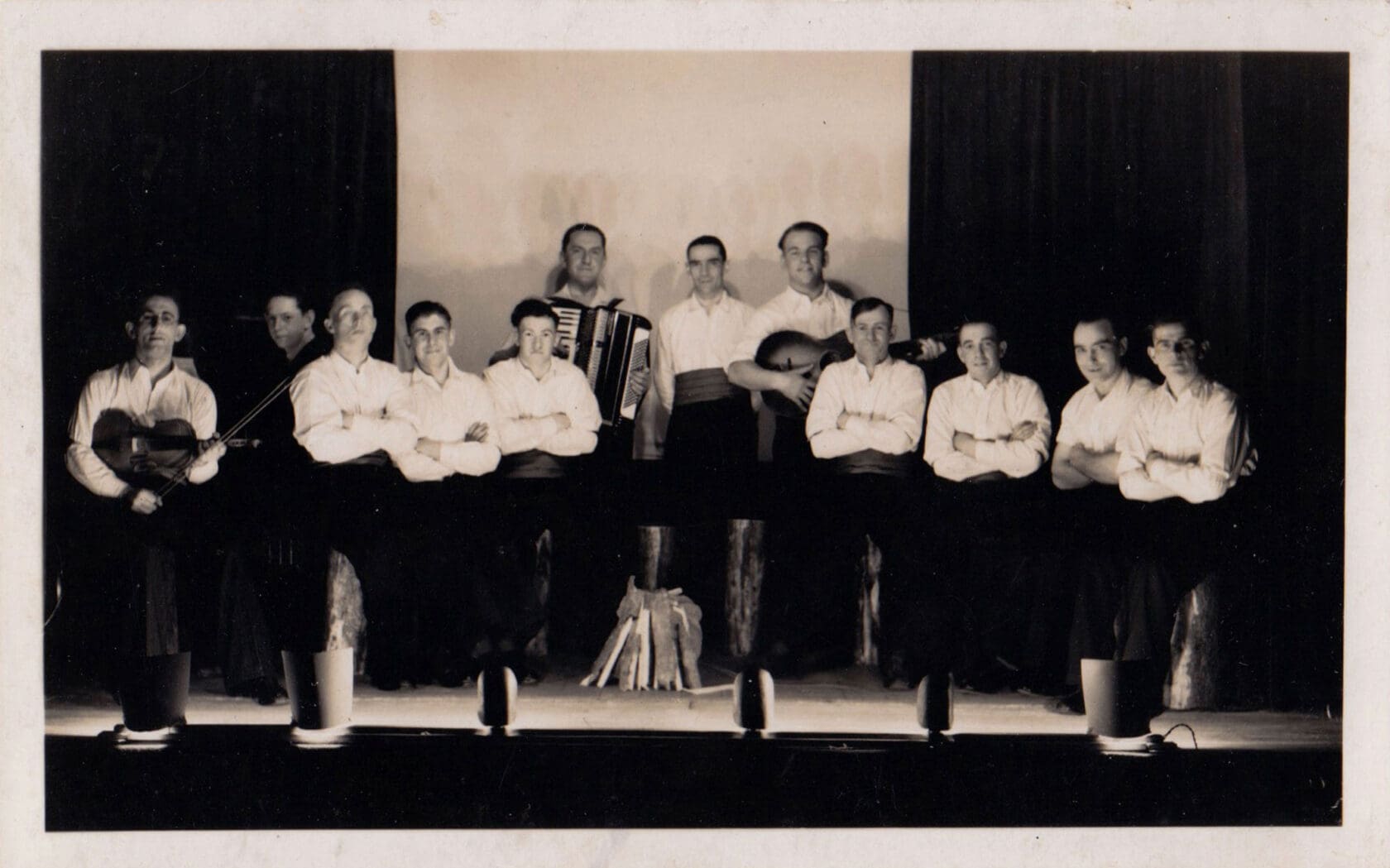
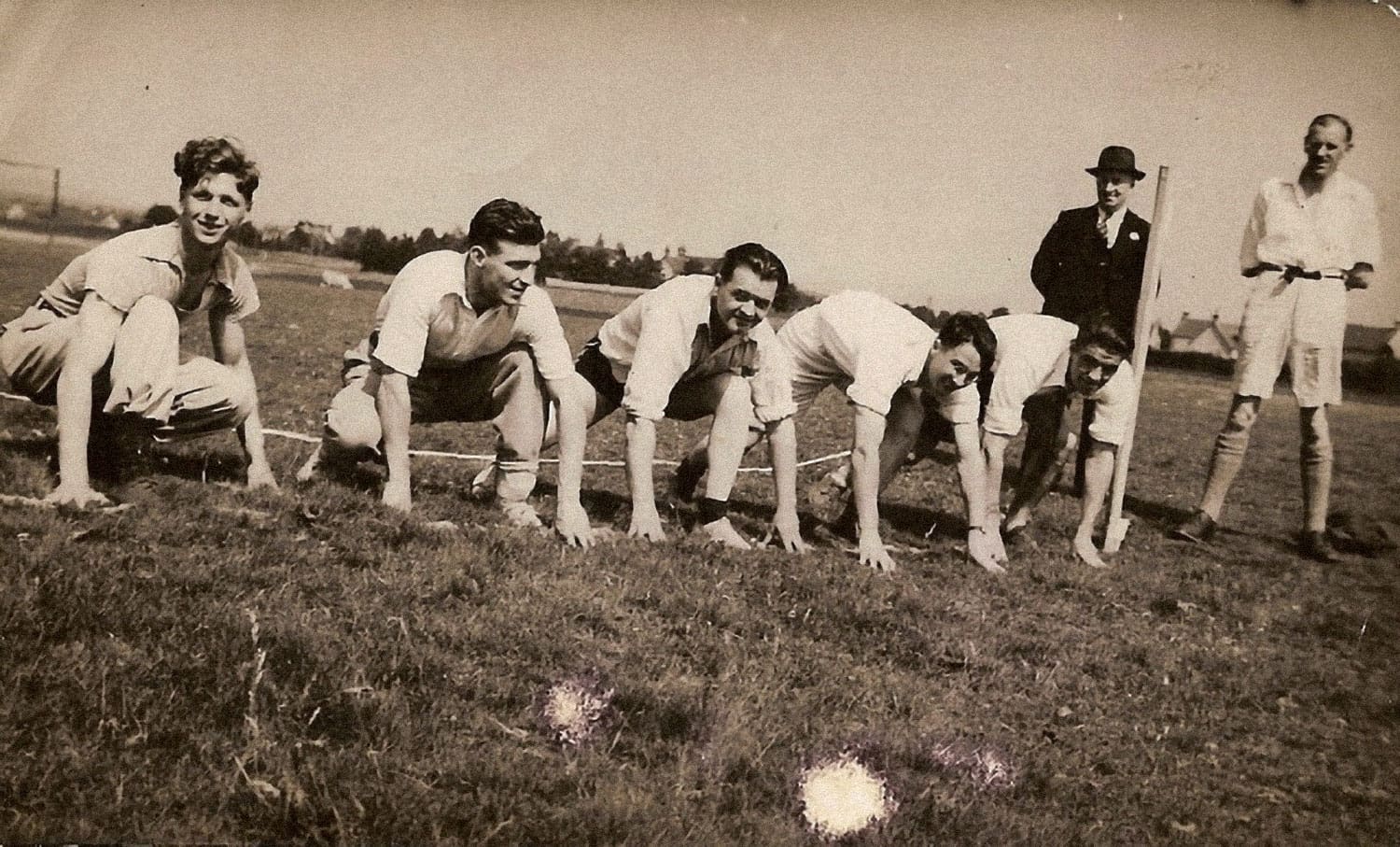
As during the First World War, concerts were a popular means of entertainment. They provided opportunities for foresters to share their creativity and culture and to learn about the customs of their hosts. Sports competitions with the Canadian Forestry Corps and other units were also popular.
Many of the foresters married while overseas and their weddings were occasions for general celebration. And NOFU members were always keen to host enlisted relatives and friends from home who were on leave from their own service duties.
Similarly, the NOFU foresters travelled throughout Scotland when they took leave. Some enrolled in courses to advance their skills and training—or to learn more about democratic governance. This would prepare them for meaningful participation in civic life at home once the war was over and Commission of Government in Newfoundland came to an end.
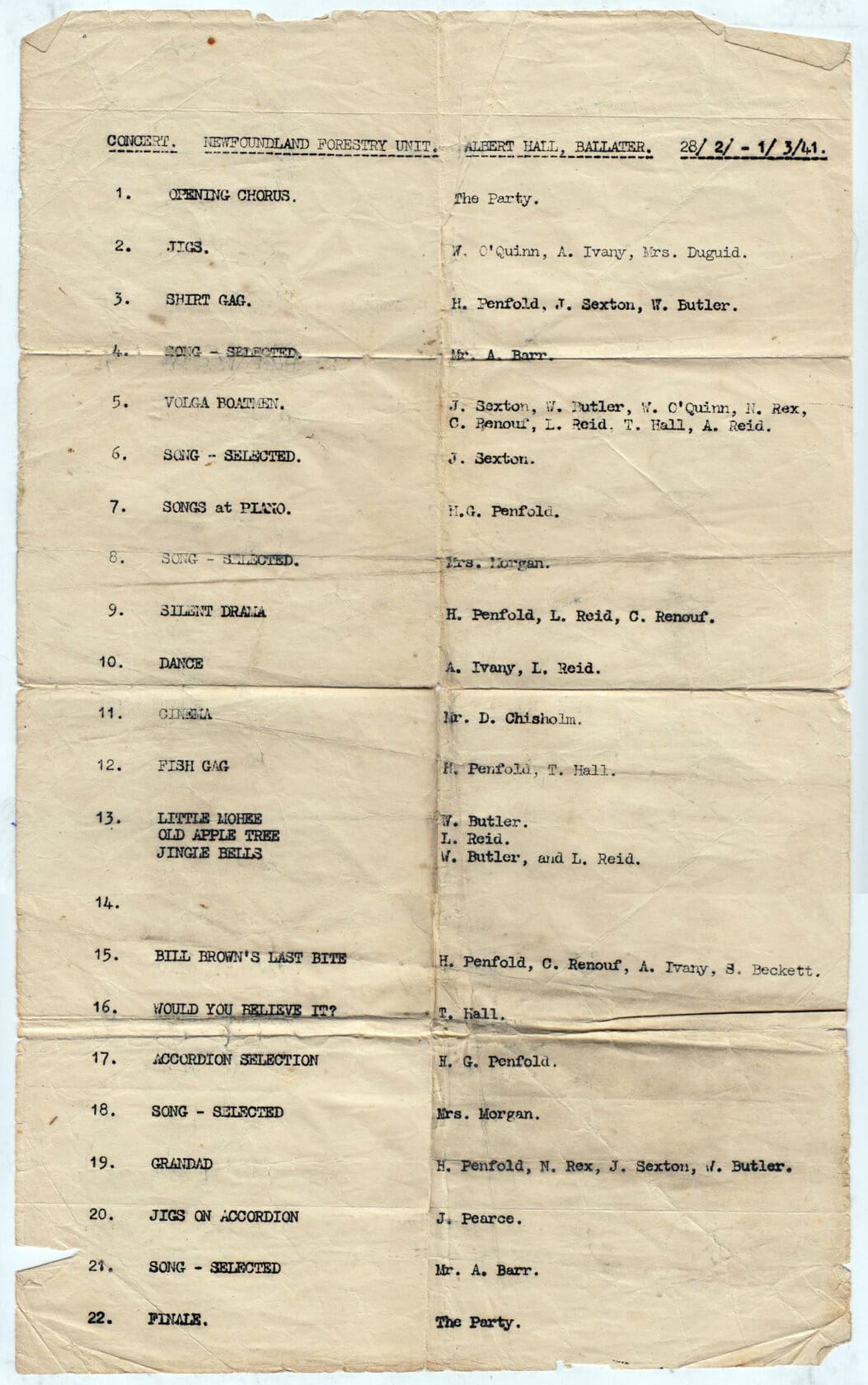
CONCERT. NEWFOUNDLAND FORESTY UNIT. ALBERT HALL, BALLATER. 28/ 2/ – 1/ 3/41.
OPENING CHORUS. The Party.
JIGS. W. O’Quinn, A. Ivany, Mrs. Duguid.
SHIRT GAG. H. Penfold, J. Sexton, W. Butler.
SONG – SELECTED. Mr. A. Barr.
VOLGA BOATMEN. J. Sexton, W. Butler. W. O’Qinn, N. Rex, C. Renouf, L. Reid, T. Hall, A. Reid.
SONG – SELECTED. J. Sexton.
SONGS at PIANO. H.G. Penfold.
SONG – SELECTED. Mrs. Morgan.
SILENT DRAMA. H. Penfold, L. Reid, C. Renouf.
DANCE. A. Ivany, L. Reid.
CINEMA. Mr. D. Chisholm.
FISH GAG. H. Penfold, T. Hall.
LITTLE MOHEE. W. Butler.
OLD APPLE TREE. L. Reid.
JINGLE BELLS. W. Butler, and L. Reid.
[blank]
BILL BROWN’S LAST BITE. H. Penfold, C. Renouf, A. Ivany, S. Beckett.
WOULD YOU BELIEVE IT? T. Hall.
ACCORDION SELECTION. H.G. Penfold.
SONG – SELECTED. Mrs. Morgan.
GRANDAD. H. Penfold, N. Rex, J. Sexton, W. Butler.
JIGS ON ACCORDION. J. Pearce.
SONG – SELECTED. Mr. A. Barr.
FINALE. The Party.
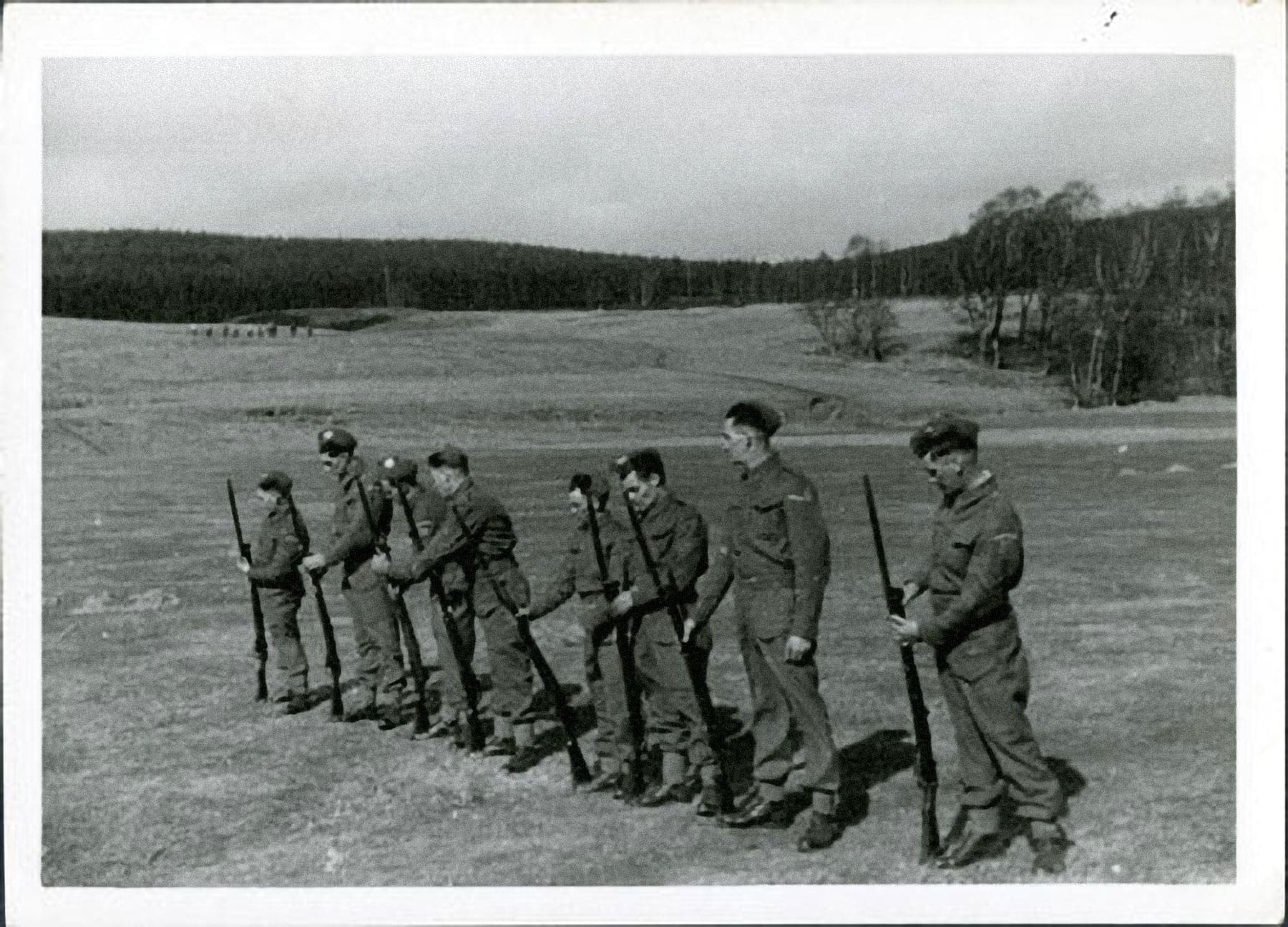
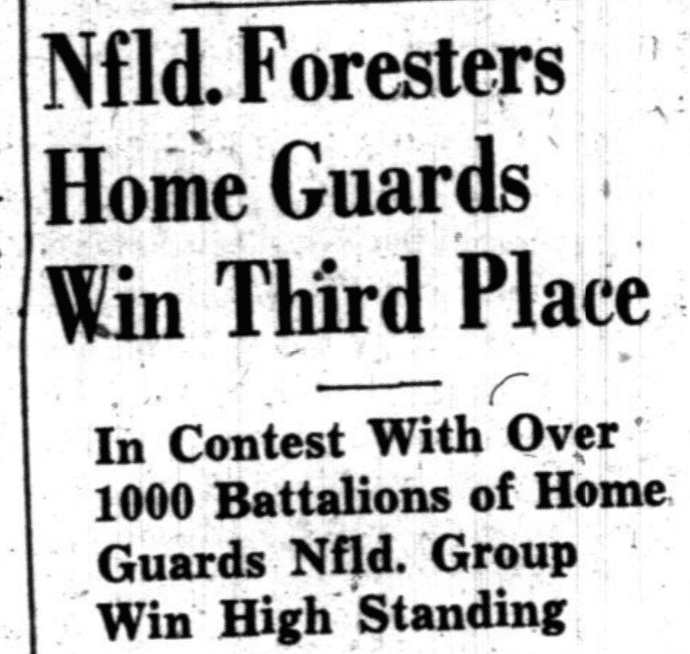
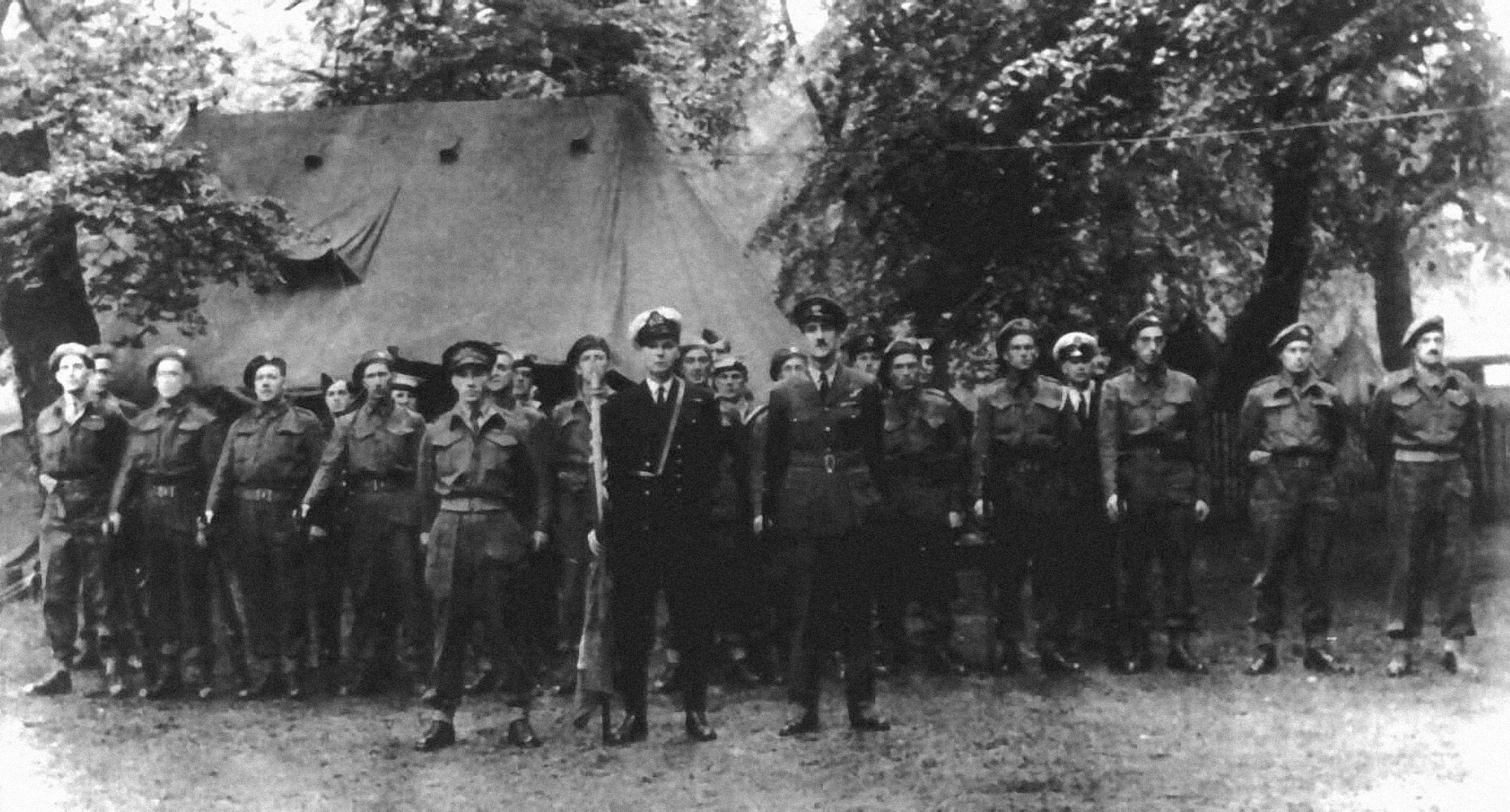
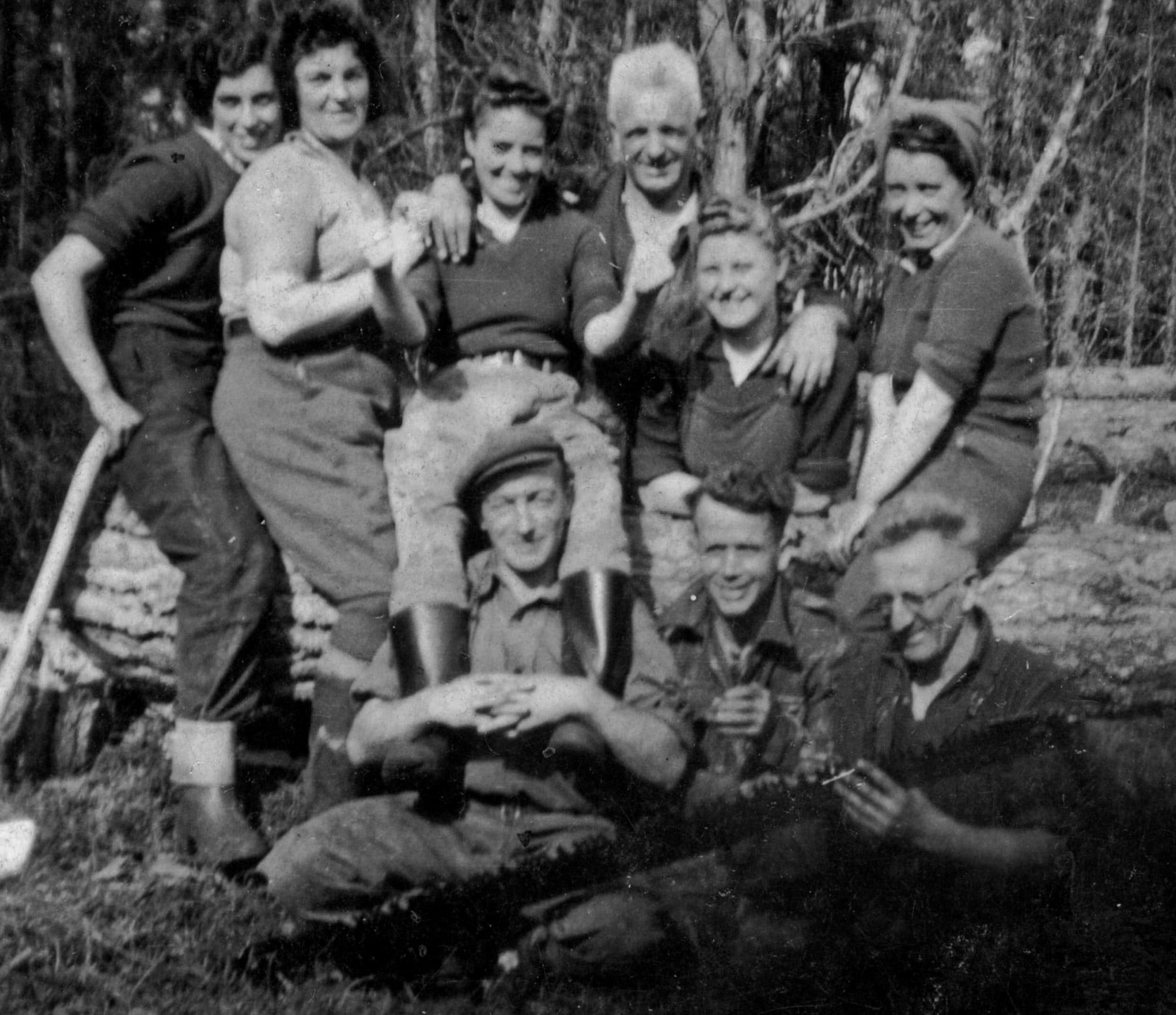
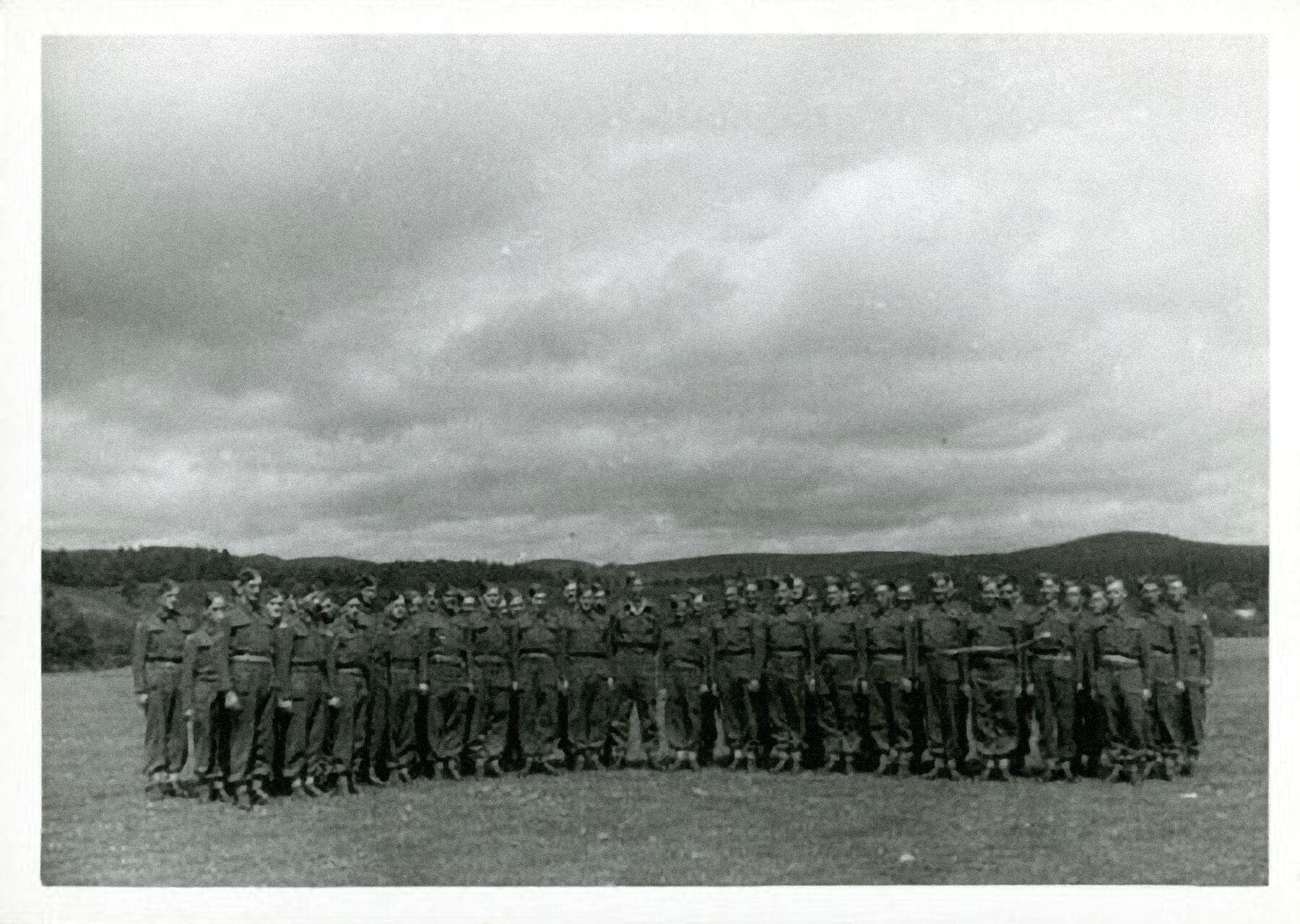
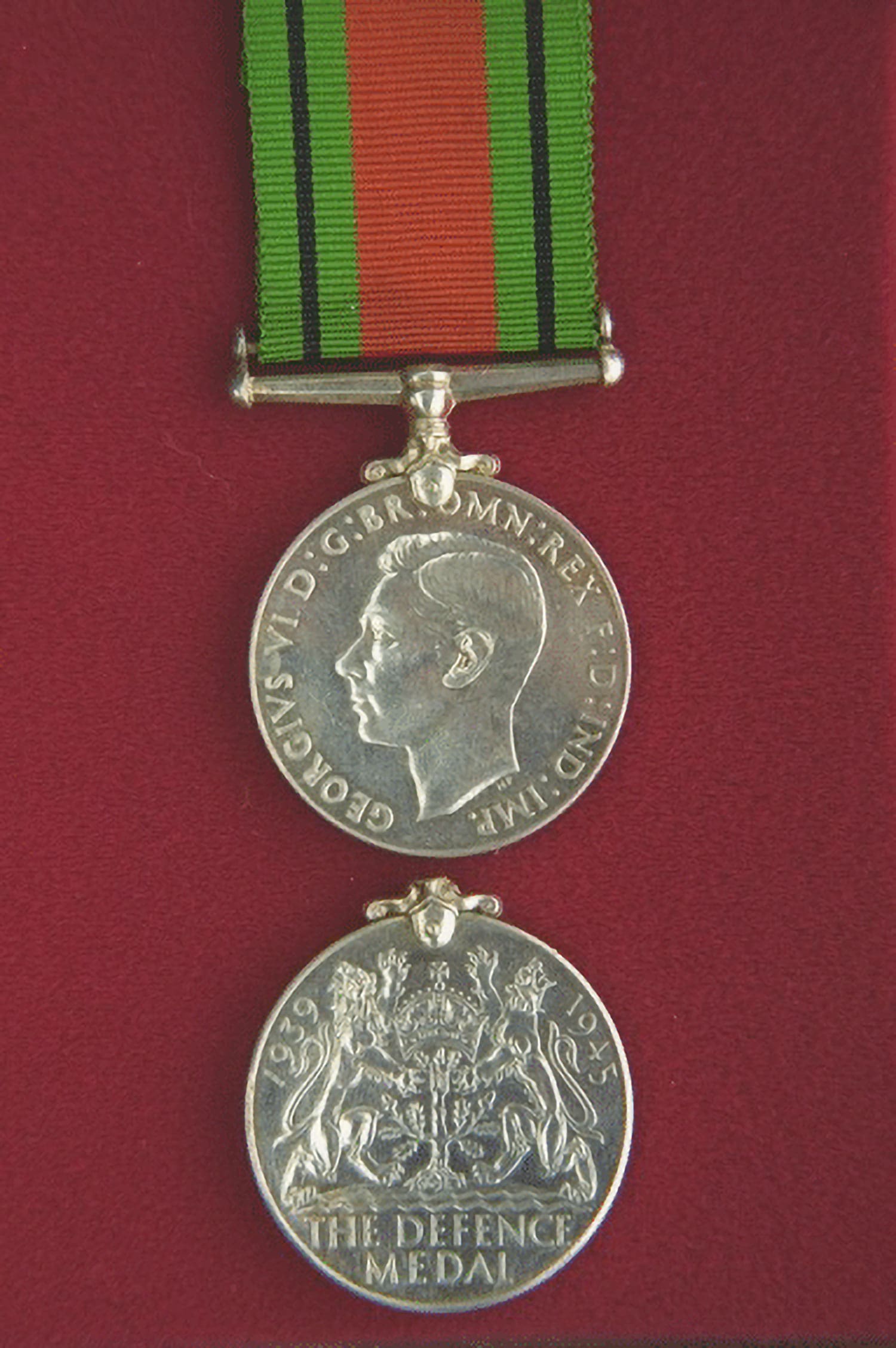
Some NOFU members volunteered for defence training and joined units of the Home Guard in communities near their camps. An all-Newfoundlander Home Guard unit was created in 1942 and it became a significant after-work occupation for many men. The 700-member 3rd Inverness (Newfoundland) Battalion quickly gained a reputation as a highly skilled, responsive unit. Brigadier J.S. Davenport, sub-area commander of Northern District, once commented: “I can say with truth that they were the only unit in the area that I felt I could always count upon to arrive at a given place in correct numbers and I knew that any task given them would be carried out to the best of their ability.
![A short text noting dates of volunteer service is centred on a white page. The Royal Coat of Arms, printed in red, is in the upper right-hand corner. The text reads: In the years when our Country was in mortal danger . . . [blank space left for name insertion] . . . who served 19 November 1942 – 31 December 1944 gave generously of is time and powers to make himself ready for her defence by force of arms and with his life if need be. George R.I. THE HOME GUARD](https://axesfortheallies.ca/wp-content/uploads/2024/10/Home-Guard-Certificate-MG-390.45.jpg)
Look & Listen
BACKWOODS WEDDING RECEPTION
By the end of 1944, there had been 372 marriages between NOFU men and Scottish women. Some weddings were celebrated at the NOFU camp where the groom lived, such as the one described in “Backwoods Wedding Reception,” published in the Press and Journal, August 20, 1941.
This video features a sequence of archival photographs of woods workers in their camps, including cooks and groups of men, and images of a lake and hills, a close-up image of “Kenny” Gaulton, a fiddler entertaining man in a bunkhouse, a Scotsman in his kilt, and a logger playing accordion. The video includes a newspaper headline about the wedding and photos from the newspaper article of the wedding ceremony and reception.
Title slide: Backwoods Wedding Reception
Image of a newspaper headline with the words “‘Backwoods’ Wedding Reception. A young Newfoundland lumberjack and his bride . . .”
NARRATOR: A young Newfoundland lumberjack and his bride from Deeside had their wedding reception in a real “backwoods” setting—in the cookhouse of a log-cabin encampment where lumbermen are quartered in the Northeast.
The couple, Mr. Stephen Walsh and Miss Catherine McIntosh, whose home is at St. Elmo, Albert Road, Ballater, first met at a dance four months ago.
The wedding ceremony was a quiet affair in the afternoon, while most of the bridegroom’s friends were still at work. But in the evening the camp went on fete.
It was a big occasion for the cookhouse staff—white cloths were something new on the long wood tables where the men usually eat. A swinging oil lamp lit the trim wooden building which, to the visitors in the company, was eloquent testimony to its builders’ skill with saw and axe.
Set among mountain pines on a wooded hillside, it gave the right atmosphere for the old-time Newfoundland songs which the company were soon enjoying.
“Kenny” Gaulton, the camp foreman, known in his own country as a logger with few equals, has also a reputation as an all-round musician.
“We’ll rant and we’ll roar like true Newfoundlanders,” he sang—striking the keynote of the evening so happily that he had to give several encores. The lumbermen joined lustily in the choruses of “The Squid-jiggin’ Ground,” “The Badger Drive” and “Love Among the Roses.”
“What about Bill’s violin?” came the call.
Stalwart Bill O’Quinn can play by the ear any tune he hears. He gave an appropriate “international” touch to the occasion by playing some Scottish tunes as well as music from his own country. Joe, his brother, was among others who contributed songs.
Then Foreman Gaulton took charge again . . . to accompany the “fiddler” in music for dancing . . . .
Credit slide:
Produced by Ursula A. Kelly & Meghan C. Forsyth
Narrated and recorded by Jim Payne
Text adapted from an article published in the Press and Journal, August 20, 1941
Photos courtesy of Irene Hunter, the Beckett family, Ballater Historic Forestry Project Association, Press and Journal, Memorial University Libraries, and The Rooms Provincial Archives
2024
Logos of the Grand Falls-Windsor Heritage Society, Memorial University, and Digital Museums Canada
AFTER-WORK ACTIVITIES
In early 1943, the NOFU’s Officer-in-Charge, Captain Jack Turner, wrote an account of leaderships’ efforts to care for members’ wellbeing outside the workday. It was published in The Western Star, on January 29, 1943. Here are two excerpts.
RECREATION
Welfare is a comparatively new branch of our activities. For a couple of years we did what we could in a small way but did not make much progress. This Spring, however, largely due to the help and support of the Dominions Office, we were able to set up a real welfare programme . . . .
Every camp except a few which are closing shortly has a recreation hut, where games may be played and letters written. These huts are equipped with tables and chairs, games, such as darts, checkers, cards, etc., and in most cases a miniature billiard table. Magazines and papers supplied by the British Councils and other friends, are also available.
Attached to each hut is a dry canteen, where tea, cocoa, soft drinks and light refreshments are for sale, as well as cigarettes, tobacco, razor blades, tooth paste, and all the other odds and ends that are always needed but are hard to get when the nearest shop is several miles away. These canteens, by the way, are run by the wives of members of the Unit.
Arrangements are being made to hold [adult education] classes in the recreation huts during the winter nights and it is hoped that, by the time this is in print, these classes will be in full swing.
HOME GUARD IN SCOTLAND
Our latest venture is the formation of our own Home Guard Battalion. Many of our members are, or have been, members of local Home Guard Units. This did not work out very well, due to the locations of our camps and the necessity of moving men long distances from time to time. As a large number of our members wanted to get a little military training it was decided to apply for permission to have a Battalion raised within the Unit. A few weeks ago the War Office authorised the raising of the 3rd Inverness-shire (Newfoundland) Battalion, Home Guard. The full authorized strength of the Battalion has volunteered. Enrolment is well under way, and training has started. We have asked to be allowed to wear “Newfoundland” shoulder titles and our Unit badge as a cap badge.
LISTEN
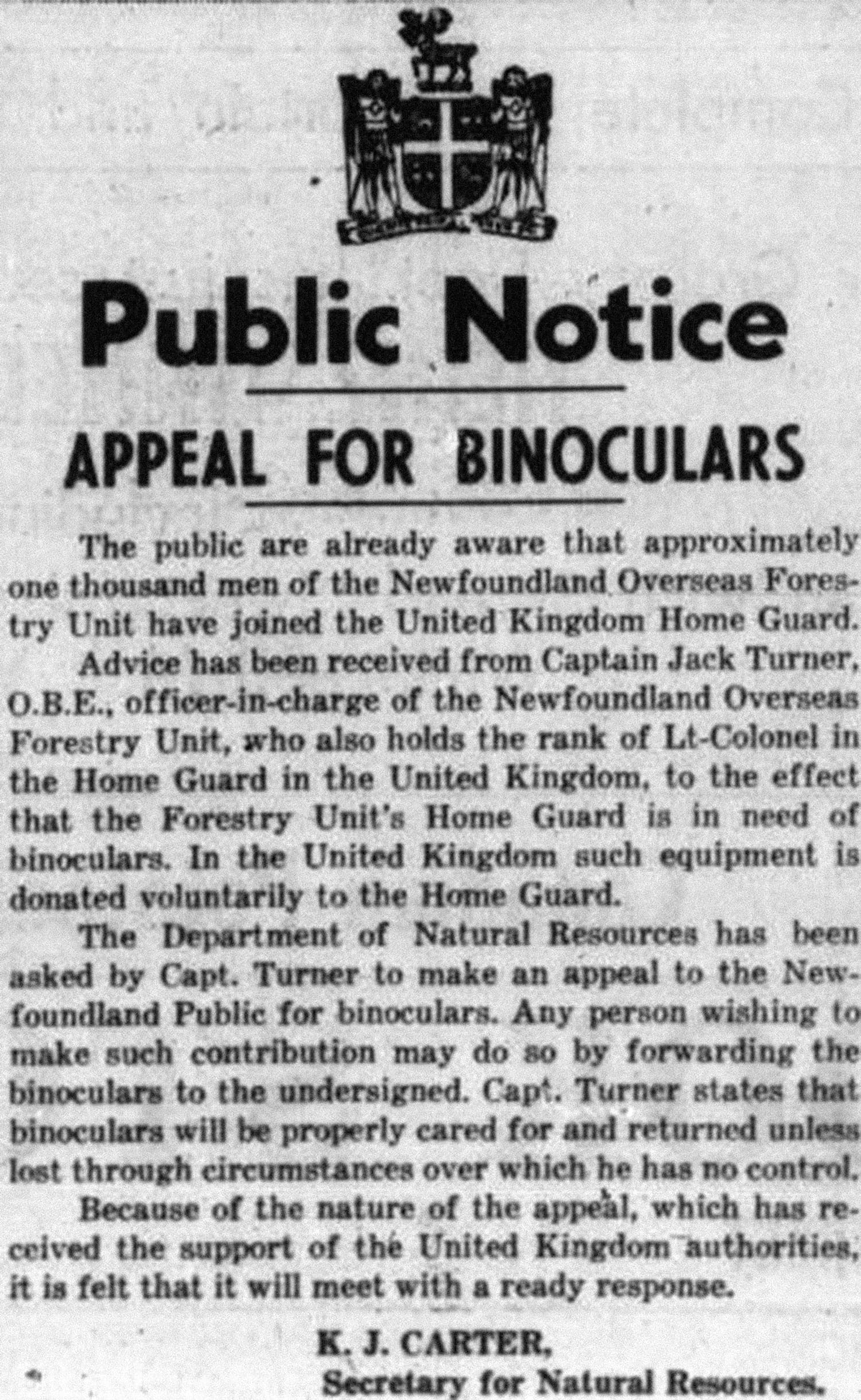
Public Notice
APPEAL FOR BINOCULARS
The public are already aware that approximately one thousand men of the Newfoundland Overseas Forestry Unit have joined the United Kingdom Home Guard.
Advice has been received from Captain Jack Turner, O.B.E., officer-in-charge of the Newfoundland Overseas Forestry Unit, who also holds the rank of Lt-Colonel in the Home Guard in the United Kingdom, to the effect that the Forestry Unit’s Home Guard is in need of binoculars. In the United Kingdom such equipment is donated voluntarily to the Home Guard.
The Department of Natural Resources has been asked by Capt. Turner to make an appeal to the Newfoundland Public for binoculars. Any person wishing to make such contribution may do so by forwarding the binoculars to the undersigned. Capt. Turner states that binoculars will be properly cared for and returned unless lost through circumstances over which he has no control. Because of the nature of the appeal, which has received the support of the United Kingdom authorities, it is felt that it will meet with a ready response.
K. J. Carter
Secretary for Natural Resources
IMPROVING SKILLS THROUGH TRAINING
Captain Jack Turner provided this update on the forester welfare programme offered at some UK camps in the spring of 1945.
A Welfare Programme was made out on the same lines as the previous year and classes in camps were conducted as usual during the winter months. Arrangement was made with the British Council for short fishery courses to be held in Aberdeen. The idea of these courses was not to make experts of the men attending them, but to increase their interest in, and general knowledge of, modern fishery methods. Four courses were held between June and November and 108 members attended. It is proposed to continue these courses during 1945 at the rate of one every month or six weeks.
Arrangements were also made in September last, in conjunction with the British Council, for an experimental course in welding. Classes are held in Inverness and the course will end about the last of April of this year. Classes are held on Saturday afternoons so that men attending must do so in their own time. Eighteen men are taking this course and 12 have attended all (or practically all) classes. The other five were irregular in attendance due to a large extent to the fact that they are truck drivers who sometimes had to work on Saturday afternoons.
The men attending this class are mechanics, drivers, camp clerks, etc. The Instructor reports that the thirteen men who have attended regularly are keen and intelligent, and are making good progress. He thinks that when they finish the course they will be fairly good welders. It is hoped to organize similar courses in the mechanical branches.
LISTEN
DRESSED TO IMPRESS
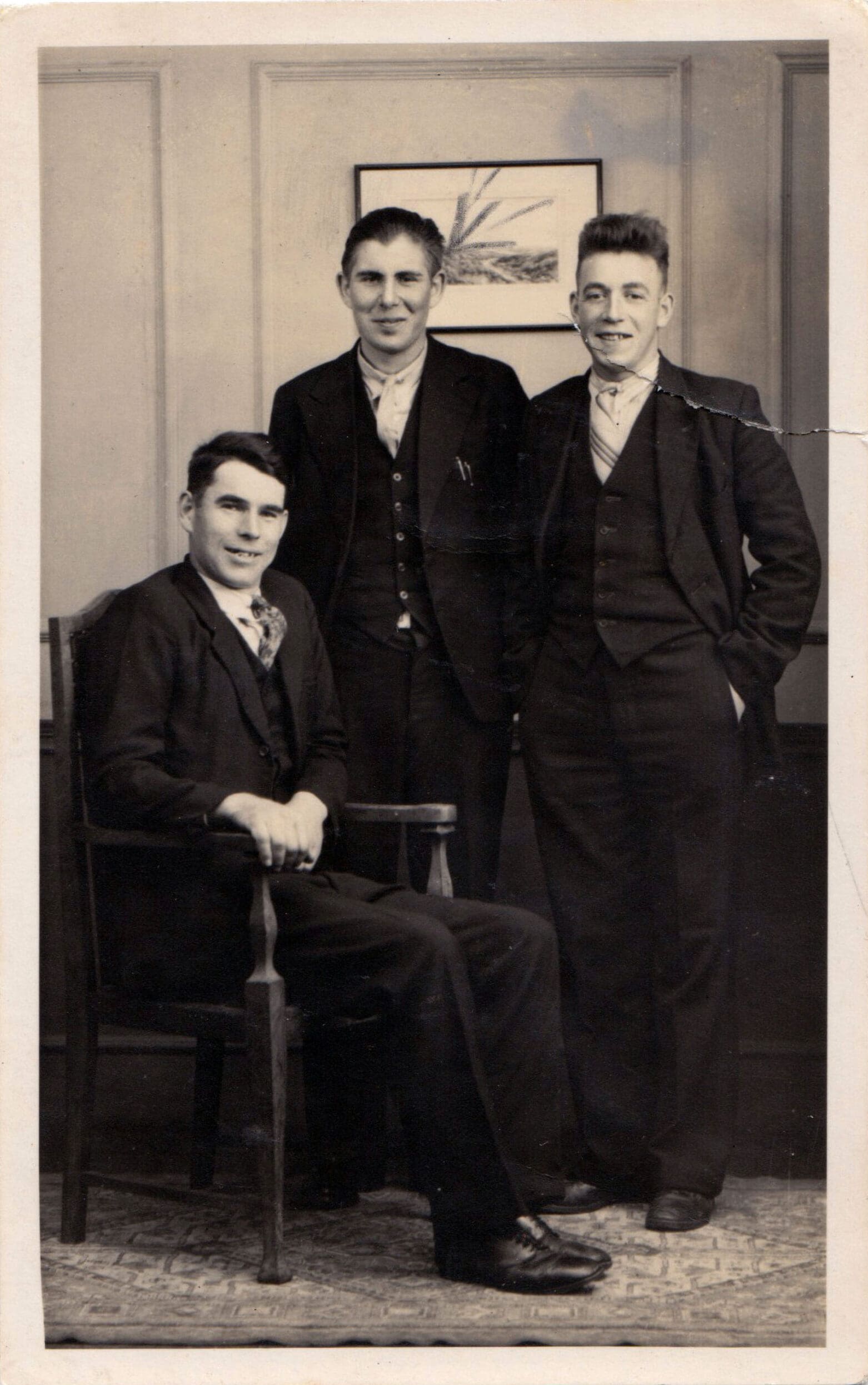
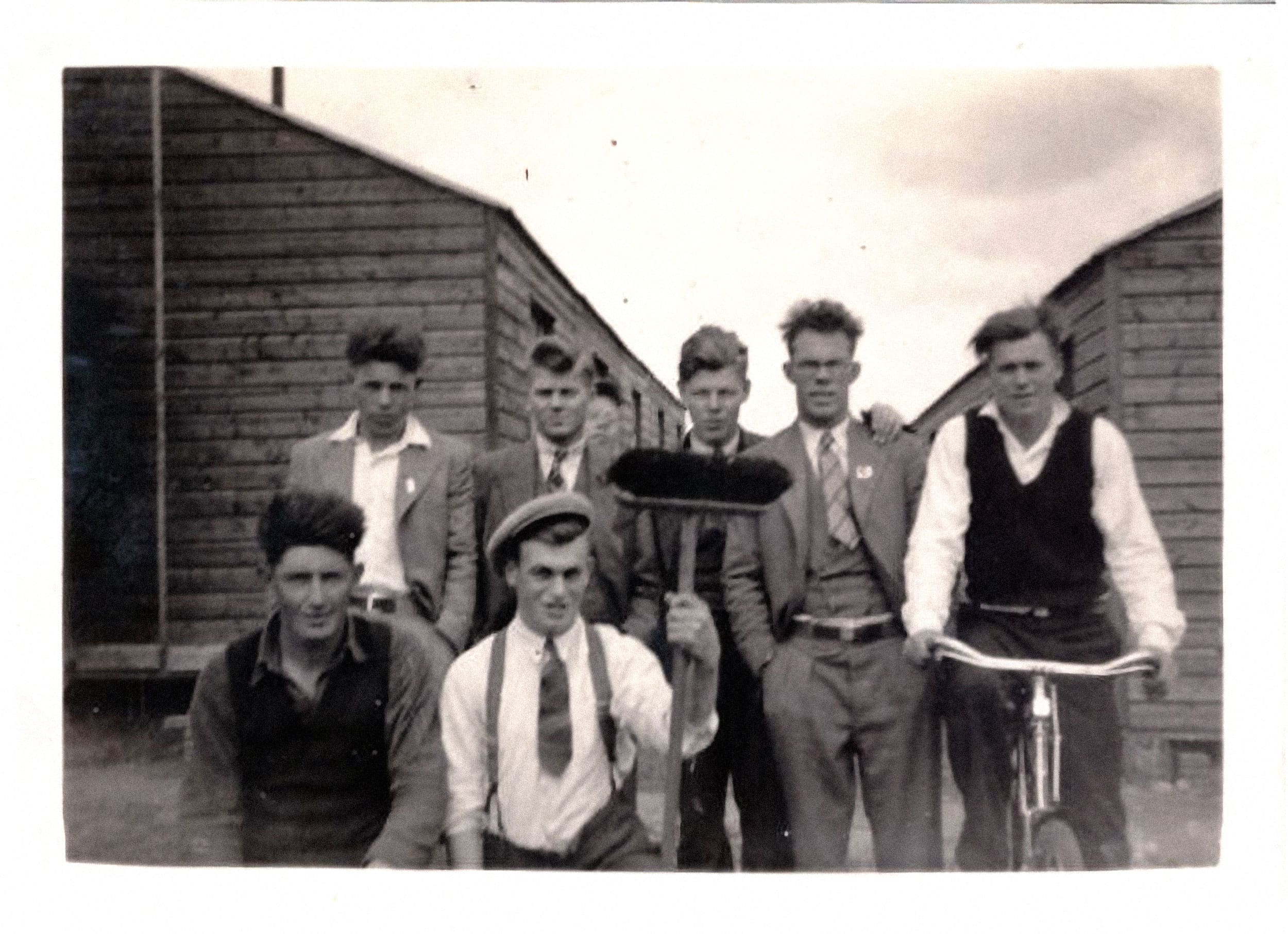
Many of the NOFU men set their sights on romance overseas—so they wanted to be dressed to impress. In the following excerpts from his 2008 book Plants & Roots, author Ian Cameron of Ballater describes how villagers helped provide the foresters with some of the necessities of courtship.
The first thing the young loggers wanted was to be decently dressed for Saturday nights out. A small car laden with suits, despite the clothes rationing, made the rounds of the logging camps. Trade was brisk . . . . The next big purchase on our colonial’s mind was a bicycle to get to the dance with his new suit on. That was a little more difficult, because bicycles were rationed at two per shop per month. However, there were no restrictions on bicycle parts and our happy bicycle agent was soon mass-producing cycles in his back shop to try to meet demand. Newfoundland at the time had few roads . . . [and] was linked up by sea and the longest narrow-gauge railway in all North America. The result was that the Newfoundlanders had to learn to ride their new bikes, and in so doing entertained the whole village.
LISTEN
THEY GAVE ME
A MOST BEAUTIFUL DAY
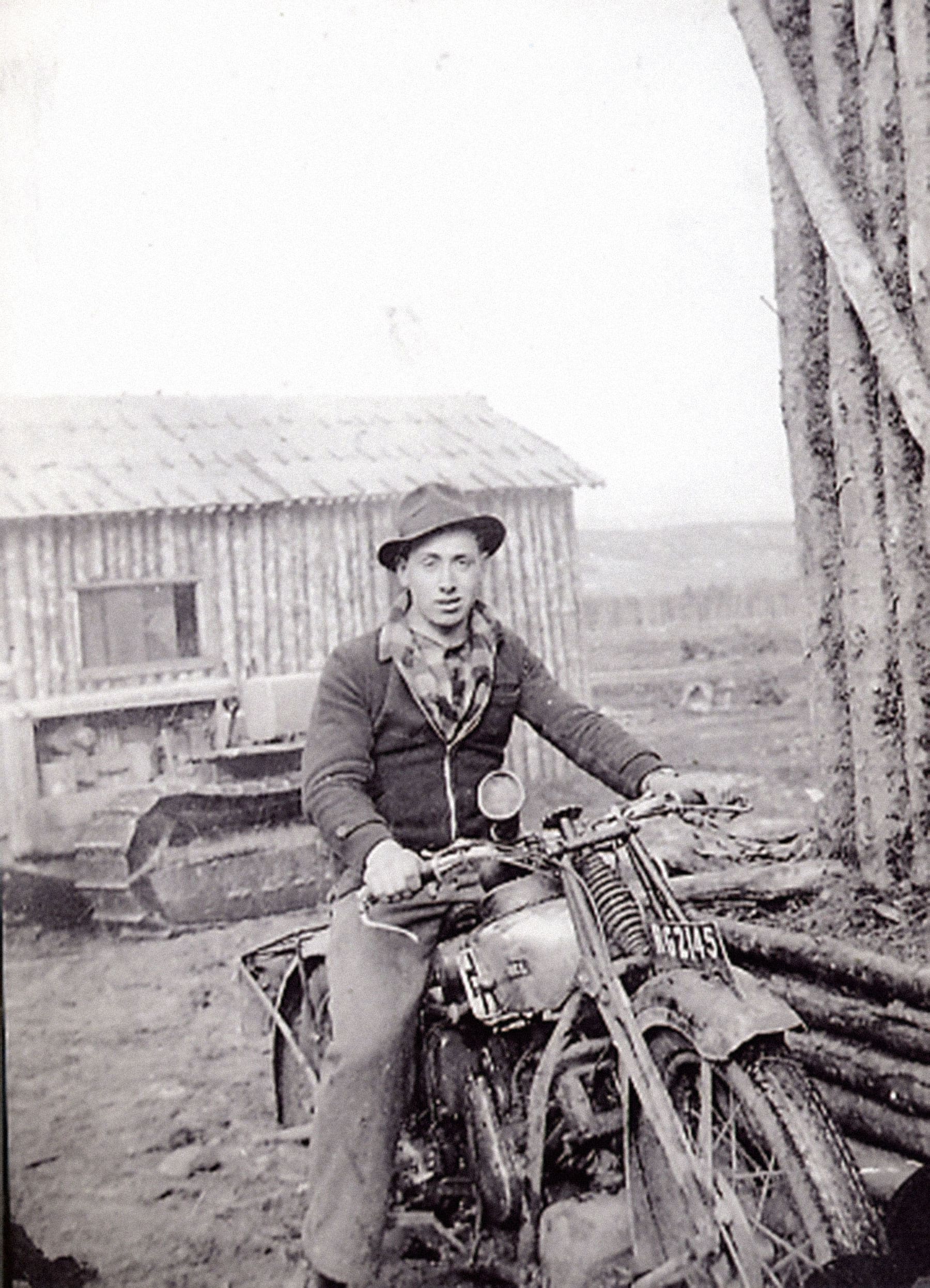
Victor L. Butler (#211413), a Newfoundland Navy (9th Contingent) sailor from Port Rexton, wrote this letter to his stepsister while visiting his brother Edgar (Ted) Butler (NOFU #2684).
Here I am at Ballater again. We arrived in port on Saturday morning and had leave from noon until noon on Thursday, so I made a trip up here again, where I arrived at midnight.
Sunday morning we got up and went to church, and in the afternoon there were several boys going up to another camp 22 miles away. So they gave [me a] most beautiful day . . . . We returned around sunset. The scenery was beautiful, everything was so calm, the sun shining on the hills so peacefully one would never think there was a war on. We stopped and saw Jim Butler’s [NOFU #1692] headstone that the Forestry boys gave him and it is very nice. The Scottish people are very fine and are proud of their country. They seem to be contented, and their boys are good soldiers. The children seem so nice, the way they speak. One pities them having to sleep in shelters.
Ted is gone to work, so I must try and finish this before dinner, for I have to take a bus at one and go to Aberdeen; go from there by train to Glasgow, where our ship is. We left her at Greenock, a seaport. Would love to come in and see you sometime, but would come back to fight this war again, “The Battle of the Atlantic.”
– printed as “A Letter From One of ‘Ours’ Overseas” in the Newfoundland Weekly, June 28, 1941
LISTEN
‘‘Newfoundlanders and Labradorians enlisted in the armed forces often visited the NOFU camps when on leave. As one spokesperson for the unit noted: ‘It’s a common sight to see a Serviceman with a Newfoundland flash among the woodsmen. They look upon the forestry camps as a little bit of Newfoundland in Scotland.’ ’’
CAPTURING MEMORIES IN VERSE
“BUNKHOUSE BILL”
By Harry Carter
Harry Carter (NOFU #2158) of Greenspond and later St. John’s, served with the NOFU for almost three years, including with the Home Guard. He wrote many songs and poems about his life and experiences, which he published in three collections: Poems and Ballads (1939), Patriotic Songs and Poetry (1940) and Victory Songs and Other Verse (1943). This third collection contains several pieces set in Scotland, including “Bunkhouse Bill,” a tribute to a fellow woodsman who offered the gifts of laughter and music to the wartime foresters.
LISTEN
There ’round the camp he laboured all the day,
Sometimes singing, sometimes whistling, always gay.
A pleasant chap indeed was Bunkhouse Bill,
Admired and liked by all who knew him well;
Because when’er he did not have a smoke,
He’d bum one and then top it with a joke;
That would compel the cranky cook to smile
And wipe the sour expression from his dial,
Thus giving all the boys around a hunch
That something nice might be prepared for lunch.
But Bill in many other ways was good,
Aside from tending to his job of cutting wood.
For when the gloom of night was ushered in,
He’d entertain us with his violin,
And try to make the other fellow see
That no matter how depressed or sad he be,
There was a store of laughter in reserve,
To give a tonic to that shattered nerve.
So as the years go by, I wish him well,
For every inch a man was Bunkhouse Bill.
LUMBERJACK LARRY
Life in Scotland offered many opportunities to learn from locals. The Scottish people, including children, happily shared their culture, their music—and sometimes a laugh—with the NOFU members. Larry Gladney (NOFU #1901) recorded several examples of this in his memoir Lumberjack Larry, as these quotes illustrate.
We landed at Invercauld Camp in the pass of Ballater only seven miles from Balmoral Castle, the summer home of the Royal Family. Jean [MacPherson, of Inverness] came up looking around for some place for us to stay. We had planned to get married that Christmas Eve. Jean and I had been walking up the old line near the River Dee. I was wearing my kilt of Murray tartan made for me at Carrbridge by the tailor for the Duke of Atholl. On the walk, we met a man who stopped us and said, “I thought you were the King. Your legs are just like his.”
A FORESTER WRITES FROM ENGLAND
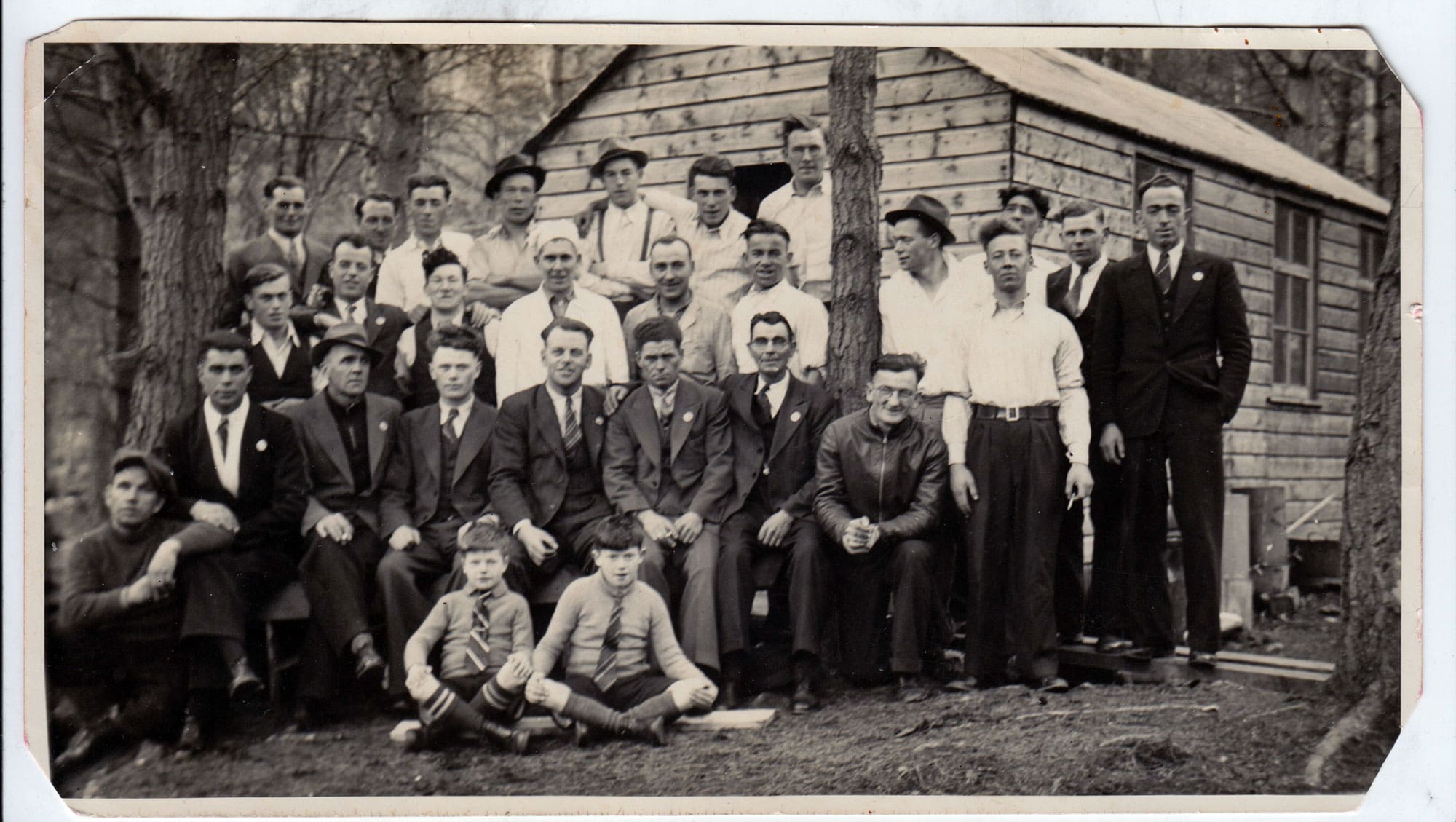
Many foresters described some of their leisure activities in letters they wrote home, and some were published in newspapers, such as this one by Clayton L. Sansome (NOFU #183).
The small villages where we are stationed have been enlivened by our presence. Dances are provided for us in the village halls at the small cost of 3d. [pence] each. These take place two or three times a week and many of our lads who are willing and eager to learn the dances can now do the Lambeth Walk, Military Two-Step, Eva Three-Step, Boops-a-Daisy and many other dances quite gracefully, as the ladies spare no amount of energy and patience in showing us. I guess we’ll all bring one back with us, for when we tell them of the snow and sports such as skating and skiing, snow-shoeing, etc. which we enjoy in Newfoundland during the winter, they all say they would like to go there.
“When we do not receive letters from home we feel rather down-hearted, and the very moment we have an attack of the ‘Blues,’ along comes the postman with a cheery smile upon his face and passes us a parcel from the W.P.A. and involuntarily we say, “God bless the W.P.A., for they have not forgotten us, even if others have.”